Atomix, six years in
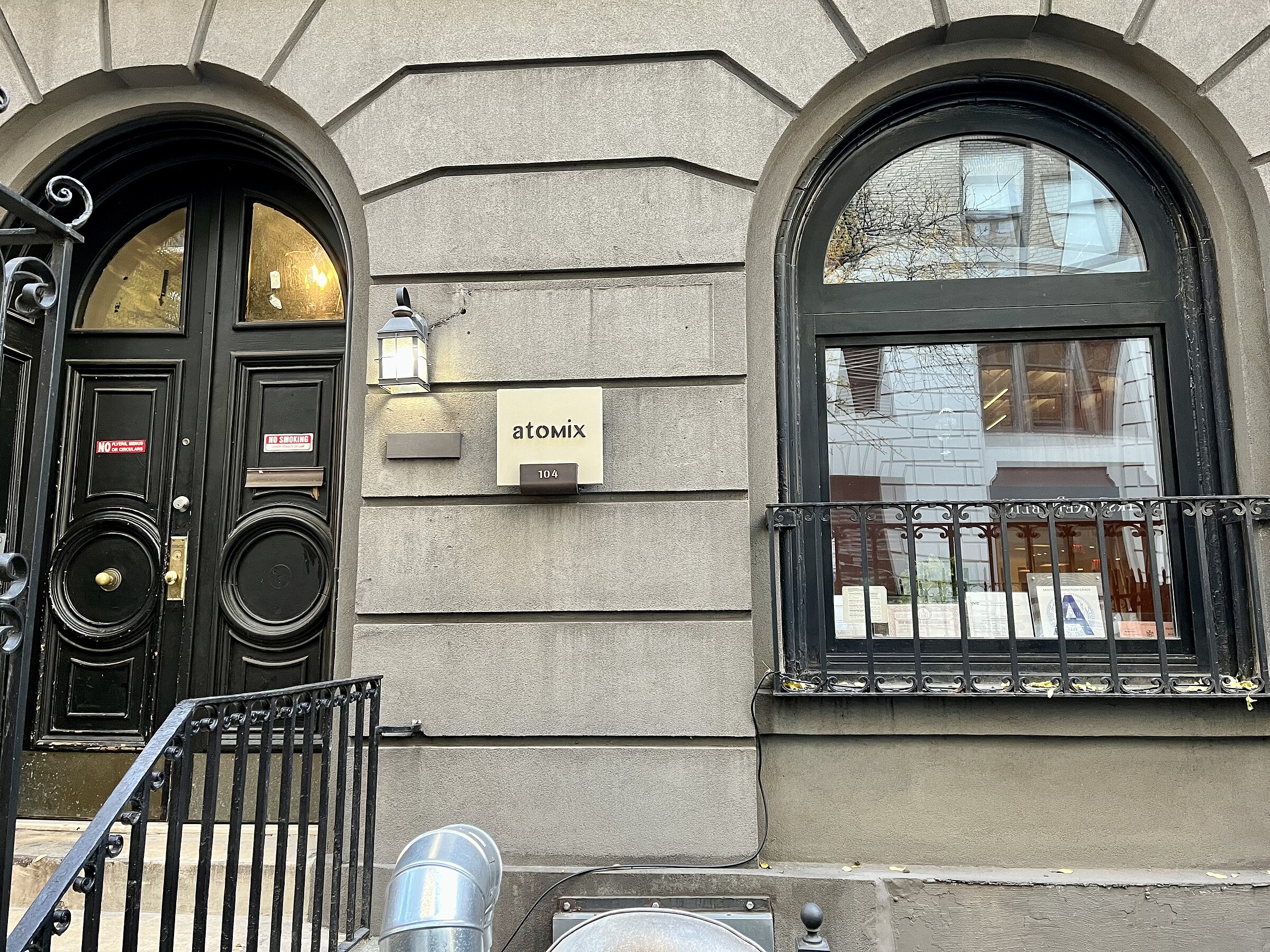
The Korean tasting menu in Murray Hill that has been climbing the World's 50 Best every year, and what JP and Ellia Park's project has become.
Atomix opened in Koreatown in 2018, moved to a townhouse in Murray Hill the same year, received two Michelin stars by 2019 and a third in 2024, and has spent the last six years making what is, by the most credible measure currently available — the World's 50 Best list — the best Korean restaurant in the world outside of Seoul and, in the opinion of several serious critics, the best restaurant in New York City full stop. That last claim is still debated. The first two are not.
The restaurant is the project of Junghyun "JP" Park and Ellia Park, a married couple who arrived in New York via Seoul, Chicago, and the kitchen of Jungsik, where JP Park was executive chef before leaving to open his own place. Atomix is the more ambitious of the two restaurants he runs with Ellia; Atoboy, opened in 2016, is the casual Korean counterpart and is excellent and is not this article. Atomix is the fourteen-seat, counter-only, single-seating-per-night tasting-menu restaurant that sits upstairs in the townhouse while Atoboy operates the ground floor.
The meal is structured as a ten-course Korean tasting menu, presented on an index-card system that the Parks designed specifically for Atomix: each course comes with a small card describing the dish, the key ingredients, and a short contextual note about what the dish references in Korean food history. The cards are collected and stapled into a booklet at the end of the meal. This is the kind of gesture that sounds precious on the page and works completely in the room.
The cooking is the point. JP Park is doing something specific with Korean food that no one else is doing at quite the same level outside Korea itself: applying the rigour of fine-dining technique to dishes that are, at their core, not fine-dining dishes. A banchan reinterpretation that elevates a humble side-dish tradition into a course unto itself. A galbi that references the Korean barbecue most Americans know but treats it with the seriousness that most American restaurants reserve for prime rib. A noodle course that is a direct reference to the cold buckwheat noodle dishes of Korean summer and is prepared with a technical precision that the street-food original does not attempt.
The most interesting quality of the menu is that it does not present Korean food as exotic. This is a departure from how Korean cuisine has typically been introduced to English-speaking diners — through the K-BBQ lens, through the fermented-and-funky lens, through the language of cultural discovery. Atomix presents Korean food as cuisine, full stop, with its own long history and its own internal logic, and assumes the diner is capable of engaging with it on those terms. This is refreshing, and it is also, six years in, clearly working. The restaurant is booked out months in advance. The World's 50 Best ranking has climbed every year. The three-star Michelin upgrade in 2024 confirmed what serious diners in New York had been saying for a while.
Where Atomix succeeds specifically is in the sense of coherence. The menu builds across ten courses. Flavours recur, deepen, resolve. The beverage pairing — JP Park and the Atomix sommelier team have built one of the more thoughtful Korean-inflected wine-and-sake pairings in New York — supports the menu rather than competing with it. The room itself, fourteen seats at a counter with the kitchen visible and the staff working within arm's length of the diner, produces the kind of intimacy that the tasting-menu format only sometimes achieves. Most of the best tasting-menu restaurants in the world treat the diner as a passive recipient. Atomix treats the diner as a participant in a conversation about a specific cuisine, and the conversation is the meal.
Where the restaurant is less successful, if success means universal appeal, is in the format itself. Ten courses across two-and-a-half to three hours, in a fourteen-seat room with a single seating, produces the kind of precise, controlled, collectively-paced experience that some diners find exceptional and others find too managed. If you want a meal where you can order what you want and drink what you want and leave when you want, Atomix is not the place. If you want the opposite — to be taken through a specific curated experience with thought and rigour and no compromises for casual drop-ins — Atomix is the place in New York.
The price reflects the category. The tasting menu runs around 300 dollars per person before beverage pairing, which adds another 200 or more. A full meal for two, with wine pairing, will clear 1,200 dollars with tax and tip. This is not cheap. It is, by current New York tasting-menu standards, fair — Atomix is cheaper than the equivalent three-star experience at Per Se or Masa, and more coherent than either.
Who should eat here: anyone serious about Korean cuisine who has not been. Anyone who has been and wants to see what six years of refinement has produced; the menu I ate in 2019 and the menu I ate in 2024 are different menus in different ways, and both are serious. Anyone who wants to understand what contemporary fine dining is doing in the city, since Atomix is arguably the most interesting thing happening at this level right now.
Who should skip it: anyone looking for a casual meal. Anyone who wants to see the kitchen surprise them with a dish they have not heard of in five years; Atomix is refined and coherent, not experimental in the way that Alinea or Noma are. Anyone on a budget that does not extend to tasting menus.
What Atomix has become, six years in, is the New York restaurant that has made the clearest argument for what a specific cuisine — a cuisine that most American fine-dining rooms still do not fully reckon with — deserves to be treated as. The three-star upgrade in 2024 was, in some sense, overdue. The restaurant had been operating at that level for years. The Michelin process simply caught up.
Eat here once. Book early. Do the wine pairing. Keep the cards.