Bode's Vintage-Textile Library, and the Discipline of Irreplaceable Cloth
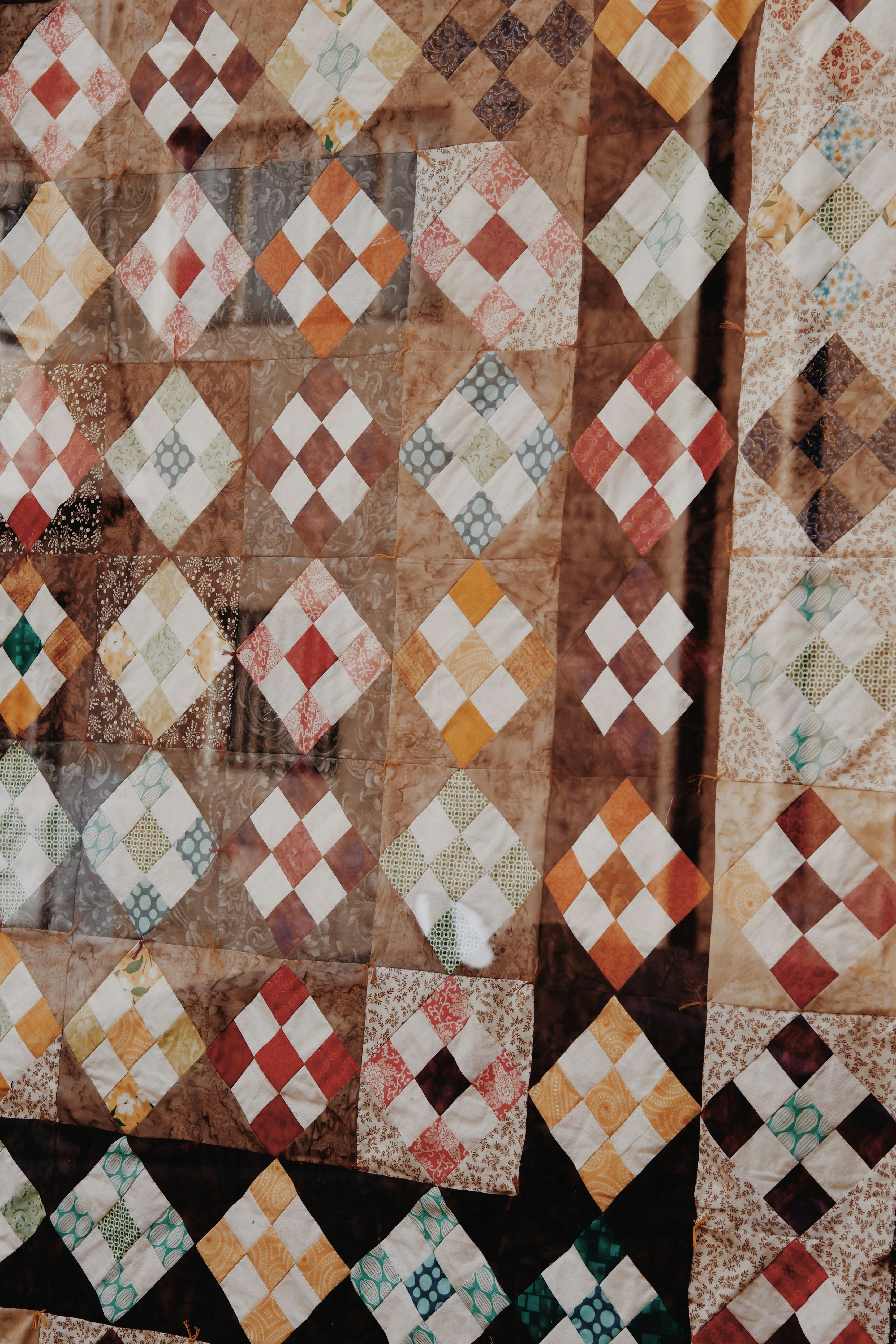
Eight years of Emily Adams Bode Aujla making menswear from antique quilts, French linens, and the discipline that cloth which cannot be repeated imposes on a design house.
Emily Adams Bode Aujla started her menswear label in 2016 in a small studio in New York with an unusual operational principle, which was that the garments would be made only from vintage and antique textiles. Not new fabric inspired by old fabric. Not reproduction fabric. Actual old cloth — nineteenth-century quilts, French hemp tablecloths from the 1920s, grain sacks, embroidered ecclesiastical textiles, hand-woven cottons from India and the American South, the entire available stock of a certain kind of accumulated domestic textile history that nobody had previously thought to make menswear from.
Eight years later the house has grown into a significant business — New York flagship, London store, serious placements in the major department stores, a men's collection that shows at New York Fashion Week, an expanding ready-to-wear line — and the founding principle has, against what most people predicted, held. Bode is still primarily made from vintage and antique textiles. The scale of the operation is larger. The textile library that the design team draws from is larger. The principle has not shifted.
The library itself is the thing that makes the operation technically interesting. Bode maintains what is, by the standards of any fashion house currently operating, an unusually serious archive of irreplaceable fabric. The archive is organised by origin, age, condition, and pattern type. It contains, among many thousands of pieces, a specific collection of nineteenth-century American quilts that the company has been acquiring at auction for most of a decade, a substantial holding of French linen and hemp household textiles, a smaller but significant collection of Indian hand-woven cottons, and various specific textile traditions that the design team has developed a working relationship with (the Senegalese weavers the house has been working with since 2019, the Indian ateliers in Gujarat that produce the contemporary elements that sometimes accompany the vintage pieces).
The archive is not decorative. It is the working material of the collection. When a piece is pulled from the library for a garment, that piece is used. It is cut, sewn, finished. It does not return to the library. The quilt becomes a jacket. The tablecloth becomes a shirt. The grain sack becomes a pair of trousers. The textile ceases to exist in its original form.
This is, from a certain angle, a destruction. Nineteenth-century American quilts are not infinitely available. The supply is finite and shrinking. A quilt used for a Bode jacket is a quilt that will not exist in 2125 as a quilt. The counter-argument, which Adams Bode Aujla has made in interviews, is that the quilts that end up at the small rural American auctions where Bode sources most of them are often in conditions that mean they would not survive another century anyway — that the quilt, in becoming a jacket, is given another lifespan that it would not otherwise have had. This is partly true and partly a rationalisation. Both things can be.
What the discipline of working with irreplaceable cloth has produced, as a design methodology, is the thing worth paying attention to. Because each piece in the archive is specific and finite, the design process at Bode is structurally different from the design process at a normal fashion house. A normal fashion house designs a garment, sources fabric to produce the garment at scale, and manufactures the garment in quantities. Bode designs in reverse: the fabric comes first, dictates the garment that can be made from it, and the resulting garment is one-of-one or nearly so. The flowered quilt becomes a specific jacket. The blue-and-white French linen becomes a specific pair of trousers. The house's inventory is not identical garments in multiple sizes; it is hundreds of specific pieces, each one different from the others, priced according to what they are.
This is a model that should not work. It violates most of the operational logic that modern fashion houses are built on. It limits scale. It complicates distribution. It requires the customer to accept that the piece they see in the store is the piece they can buy, rather than a sample of a piece that will be made to their size. And yet the model has, in Bode's specific execution, worked well enough that the company is now profitable at a scale that most small menswear houses never reach.
The customer is, in part, what makes this work. Bode's buyer is, broadly, someone who has accepted a specific proposition about how clothing should work: that the best pieces in a wardrobe are often not the newest, that an individual garment with a story is worth more than a collection of mass-produced pieces without one, and that the specific patina and wear of aged fabric is a feature rather than a problem. This is a customer base that had to be built, because it did not quite exist at scale before Bode started; the quilt-jacket or the grain-sack-trouser was, in 2016, an unfamiliar idea to most men with the budget to buy one. Adams Bode Aujla built the category alongside the brand.
What the discipline of irreplaceable cloth imposes on the design team, beyond the practical logistics of archive management, is a specific attention to the material that most fashion design does not require. The designers know, when they pull a quilt from the archive, what the quilt is made of, roughly when it was made, and often where. The garment is, to some degree, built in response to what the textile already is. The jacket from the 1880s Pennsylvania quilt is a different jacket from the one that would have been made from the 1920s French hemp tablecloth, not because the pattern is different but because the cloth is asking for a different garment.
This is the attention that, more than anything else, distinguishes Bode from the many brands that have since attempted similar models (the vintage-inspired, the deadstock-sourced, the heritage-textile-referencing). Those brands are using new cloth that looks old. Bode is using old cloth. The difference, once you handle both, is enormous.
For the buyer: the pieces are not cheap. A Bode jacket runs between a thousand and two thousand dollars depending on the textile. Some pieces, made from particularly rare or significant archives, run higher. The shirts and the lighter pieces are more accessible — three to six hundred dollars — and are where many Bode customers start.
For the collector: the pieces appreciate, or they hold value, in ways that new garments almost never do. A Bode jacket from 2017, well cared for, will now sell on the resale market for more than its original retail. The rarity is, of course, structural: there was never a duplicate.
The broader point about Bode is that it has demonstrated something about what luxury in menswear can be, which is that it can be the specific material history of a piece of cloth rather than the brand name on a label. The customer is paying for the quilt, in a sense, more than for the design. The design is the vehicle through which the quilt becomes a garment. The material is the point.
This is not an operating principle that other houses can easily copy, which is part of why Bode has remained distinctive rather than being commoditised. The archive is the competitive moat. The discipline of using it is the operating practice. The clothes are what come out the other end.
Look at the pieces. They are, for the right customer, the most specific menswear being made in America right now.