Frama's Rivet chair, five years on
A Copenhagen studio's industrial-tradition dining chair, and the case for furniture priced to be lived with.
Frama is a Copenhagen design studio that operates out of a former apothecary in the Nyboder district, and whose work sits at a specific intersection of Scandinavian design traditions that is increasingly uncommon: the intersection where the material of an object is allowed to do most of the design work, where the forms remain simple, and where the objects themselves are priced to be used rather than collected. The Rivet chair, introduced in 2020 and now five years into production, is one of the clearest examples of what Frama is doing, and is worth considering both on its own terms and as an indicator of where a particular kind of contemporary Scandinavian design is heading.
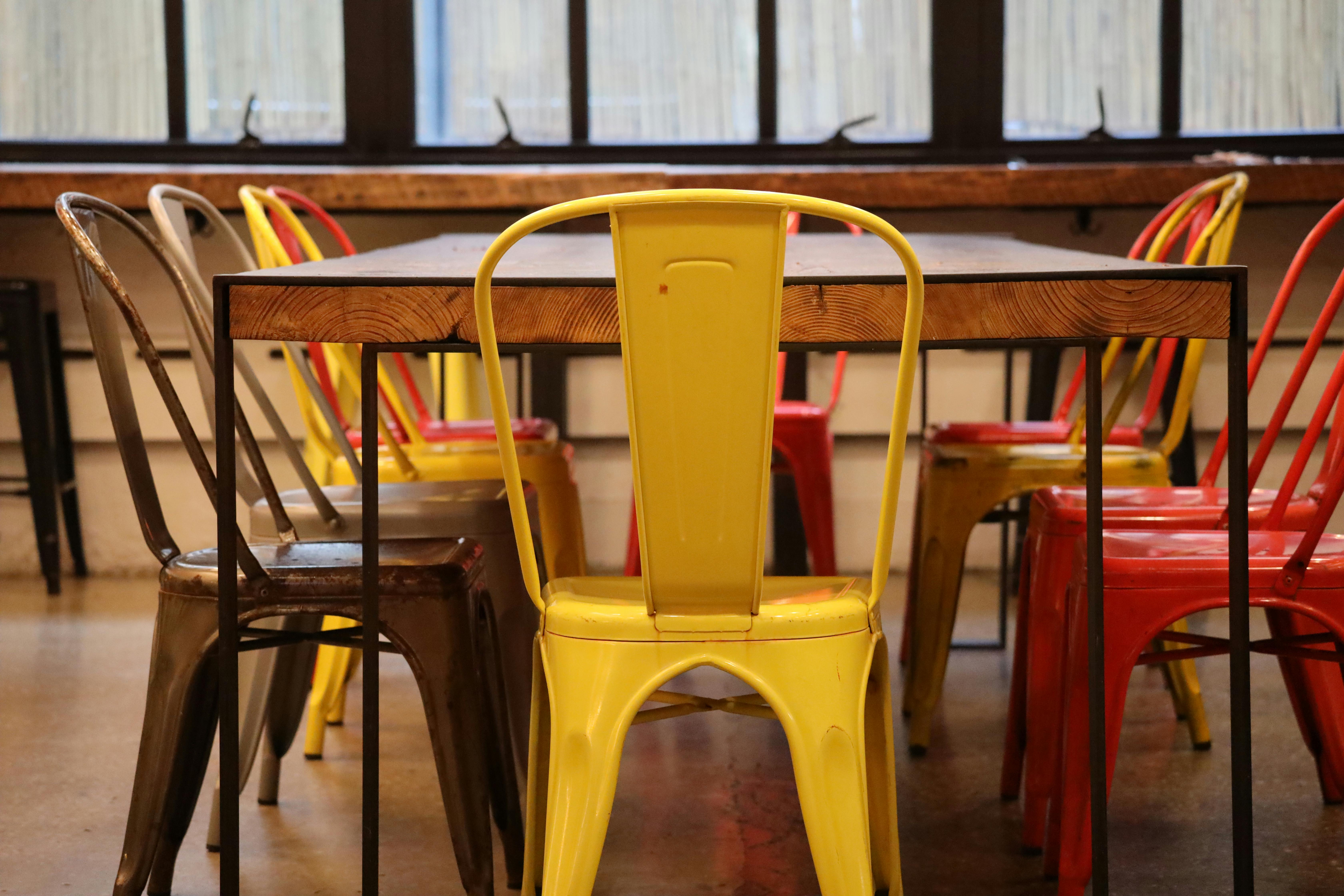
The chair is, to describe it: a dining chair in steel, with a solid oak seat, held together by exposed rivets at the joints. The frame is powder-coated in a limited palette of colours, with the black and the deep green being the most-sold. The form is recognisable as a dining chair but has a specific industrial quality that distinguishes it from the wood-heavy Scandinavian dining chair tradition that Danish design is usually associated with. It is neither a Wegner reference nor a Jacobsen reference. It comes out of a different lineage, which is worth identifying.
The lineage is industrial, in the specific sense that the chair references workshop furniture from the late nineteenth and early twentieth centuries — the kind of utilitarian seating that was produced for factories, schools, and railway waiting rooms before the post-war generation of Danish designers introduced the softer, more domestic wooden vocabulary that has since come to define Scandinavian dining chairs. The Rivet chair sits inside this older utilitarian tradition, updated with contemporary proportions and a contemporary palette. The rivets themselves are both structural and visual: the chair is actually held together by them, and the fact that the joinery is exposed rather than concealed is the key design decision.
What this produces, in use, is a chair that is genuinely comfortable, genuinely durable, and genuinely easy to live with in a way that the more ceremonial Scandinavian dining chairs often are not. A Wegner Wishbone chair is a beautiful object. It is also, for regular daily use over years, somewhat demanding: the wood requires care, the woven seat develops a specific kind of wear pattern that some owners find attractive and others find frustrating, and the price point puts it in the category of furniture that owners tend to treat carefully. The Rivet chair is made of materials that tolerate being lived with. The steel can be wiped down; the oak seat develops a patina but resists dents and stains better than the lighter woods used in the more traditional Scandinavian chairs. The chair is, in the proper sense of the word, working furniture.
The price reflects this positioning. A Rivet chair runs around six hundred euros, which places it below the more famous Scandinavian chairs but above mass-produced alternatives, in a middle ground that Frama has staked out across its whole furniture range. The pricing is deliberate. Frama's customer base, from what the studio's founders have said in interviews, is the kind of buyer who wants well-made furniture for a working home — not the showcase home, not the museum-referencing home, but the home where people eat meals at the chair and children sit on the chair and the chair remains in use for decades.
Five years into production, the chair has done what Frama hoped it would do. It has sold consistently. It has been placed in restaurants, offices, and public spaces alongside its residential sales. The wear patterns on the five-year-old chairs, now visible, confirm what the studio predicted: the steel ages well, the oak seat develops a darker patina across the high-use areas, and the rivets — which were the aesthetic risk of the design — have held up both structurally and visually. A Rivet chair that has been in regular use for five years looks like a chair that has been in regular use for five years, which is, in design terms, the highest compliment one can pay to a piece of working furniture.
What the Rivet chair represents, in the broader Scandinavian design context, is a quiet but meaningful shift away from the post-war wood vocabulary that has dominated the category for seventy years. The Wegner and Jacobsen and Juhl tradition produced extraordinary furniture, and the tradition is not going anywhere; those pieces will continue to be made and sold for as long as the manufacturing infrastructure exists to support them. But the generation of Scandinavian designers currently working — Frama, Hay, Frama's peers at Menu and at some of the smaller Copenhagen studios — are extending the tradition into materials and vocabularies that the post-war generation did not fully explore. The Rivet chair is a specific example of this.
What it also represents, more narrowly, is a thesis about how furniture should be priced and positioned. The Scandinavian design tradition has, in the last two decades, bifurcated into a high-end licensed-heritage segment (the reissued Wegners and Jacobsens, sold at significant prices through specialist dealers) and a low-end fast-furniture segment (IKEA and its various competitors). The middle ground — well-made contemporary furniture at prices that working households can justify — has, surprisingly, been underserved in the home market of the tradition itself. Frama and the studios in its peer group are now filling that middle ground. The Rivet chair is, in this sense, a normative piece of furniture: it says that a well-made dining chair should cost this much, should look like this, and should last this long. Most of the furniture currently sold in the Scandinavian markets does not meet this standard.
Buy the chair. Eat at it for five years. The patina will be the record of those five years, and the chair will continue to function the way it functioned when it arrived.
Most dining chairs do not continue to function. This is one of the few that does, and the others, for the most part, cost considerably more.