Greenpoint on a Saturday, without a plan
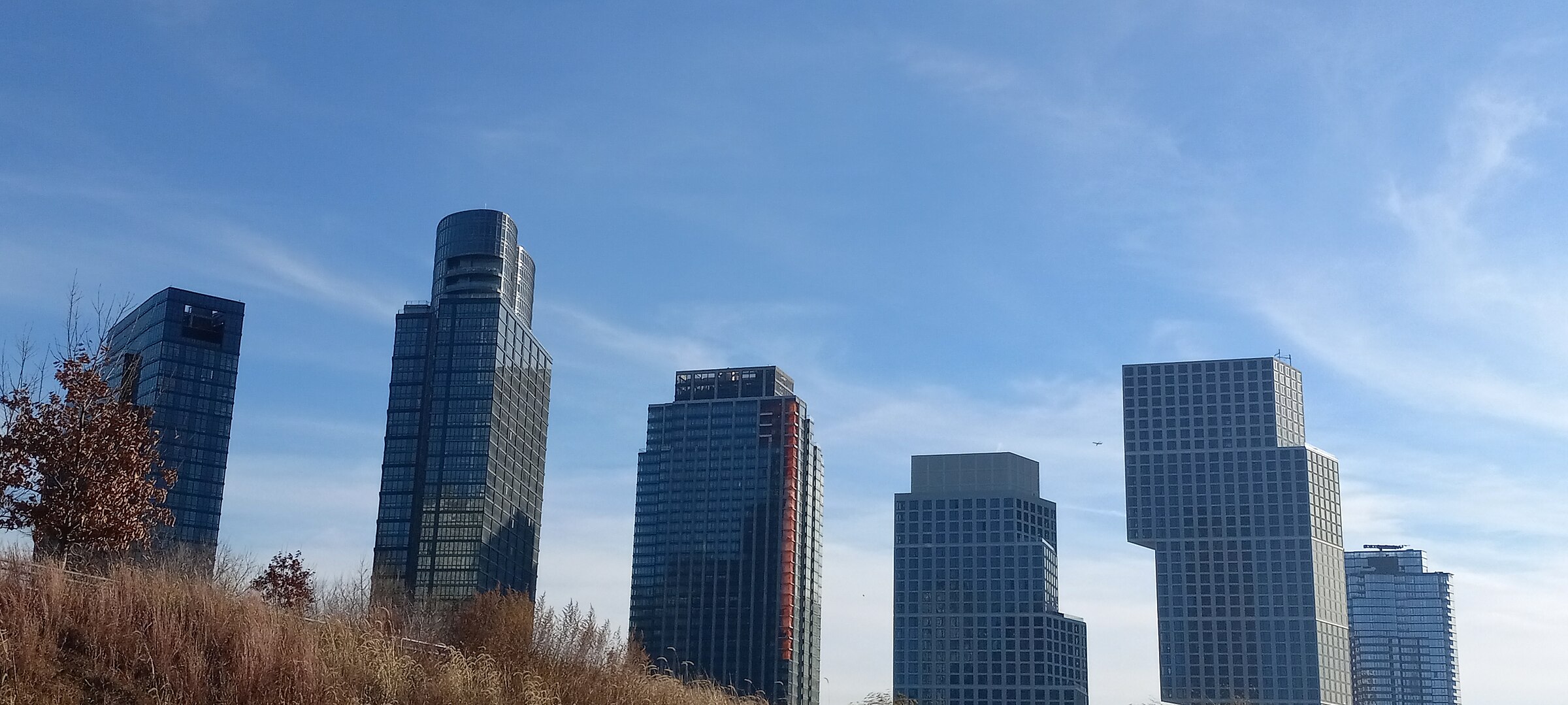
Brooklyn's last unfinished neighbourhood, walked from Franklin Street to the East River and back.
The thing about Greenpoint is that there is no reason to go there, which is the reason to go.
Greenpoint sits at the northern tip of Brooklyn, across the East River from midtown Manhattan, bordered by Williamsburg to the south and Queens to the north. For most of the last century it was a working Polish neighbourhood — St. Stanislaus Kostka parish is still there, the Polish butchers are still there, the old-country bakeries on Manhattan Avenue are still there — and for most of the last fifteen years it has been the neighbourhood to which the Williamsburg creative class has relocated as Williamsburg became too expensive to live in. The result is the specific Brooklyn equilibrium in which the tattooed thirty-somethings queuing for the natural-wine bar share the sidewalk with the Polish grandmothers walking to the pierogi shop, and neither group pays any attention to the other.
Saturday without a plan is the correct way to visit. Start on Franklin Street, which is the spine. It runs north-south the length of the neighbourhood and hits most of what there is.
Coffee at Partners, on the corner of India. The room is small, the counter is long, the coffee is serious. Sit inside if you want to read; sit outside if you want to watch the street. An hour is the minimum.
Walk north. Tortoise General Store sells Japanese kitchenware at prices you can justify once and not twice, which is why it is a good place to look rather than buy. Homecoming, further up, is a flower-and-coffee shop in the Scandinavian mould that has been imitated dozens of times in Brooklyn and nowhere has quite matched the original. Photographs are allowed but nobody really takes any.
Lunch is a question. Glasserie, if it is open and you have the inclination, does Levantine food with a natural-wine list in a former glass factory that is one of the prettier restaurant rooms in New York. If Glasserie is too much, there is Sunday in Brooklyn on Wythe, which is technically south into Williamsburg but close enough. If you want to stay in Greenpoint proper and eat Polish, there is Karczma on Manhattan Avenue, which is the proper version of what most of America thinks Polish food is — kielbasa and pierogi and dill-heavy everything — and which is cheap and good and full of actual Polish people on a Saturday.
The afternoon is WNYC Transmitter Park, which is a small waterfront park at the end of Greenpoint Avenue with a pier that runs out into the East River. The view is midtown Manhattan from the north, which is not the photograph everyone takes; most people take it from Williamsburg, fifteen blocks south, where the skyline looks the way it looks in the photographs of Brooklyn you have seen. From Transmitter Park the angle is different — the Empire State is further left, the Chrysler is visible, the UN is closer. It is, for most New Yorkers even, an unfamiliar view.
Walk back inland via the waterfront. There is a path now that runs most of the way along the water from Transmitter Park down to the Williamsburg ferry terminal, which was not there five years ago. Take it. The East River on a clear Saturday afternoon does something to the light that the city does not usually do.
Dinner without a plan is Greenpoint's strong suit. There are twenty restaurants within a six-block radius that will feed you well. Le Fond for French-ish. Chez Ma Tante for the pancake that New York Magazine has been writing about for seven years and which continues to be very good. Bonnie's for Cantonese-American. Oxomoco for Mexican. None of them are famous in the way Manhattan restaurants are famous. All of them are better than most Manhattan restaurants at this price point. Walk until one opens in front of you. Sit at the bar if there is no table. Order a bottle of something.
The specific argument for Greenpoint, rather than Williamsburg or DUMBO or any of the other Brooklyn neighbourhoods that have been through their renovation cycle, is that Greenpoint has not quite finished its cycle. Williamsburg has — Williamsburg is now what it is going to be for the next twenty years, which is a kind of luxury-adjacent Brooklyn simulacrum of itself, and is not bad but is predictable. Greenpoint is still moving. The grandmothers are still here. The pierogi shops have not all closed. The warehouses on the waterfront have not all been converted. For another five or six years, the neighbourhood will be a place where both versions of Brooklyn exist at once, and then one of them will win, and it will be less interesting.
Go on a Saturday. Do not make reservations. Start on Franklin Street. See what happens.