Inside the Beirut Atelier That Still Makes Couture After Everything
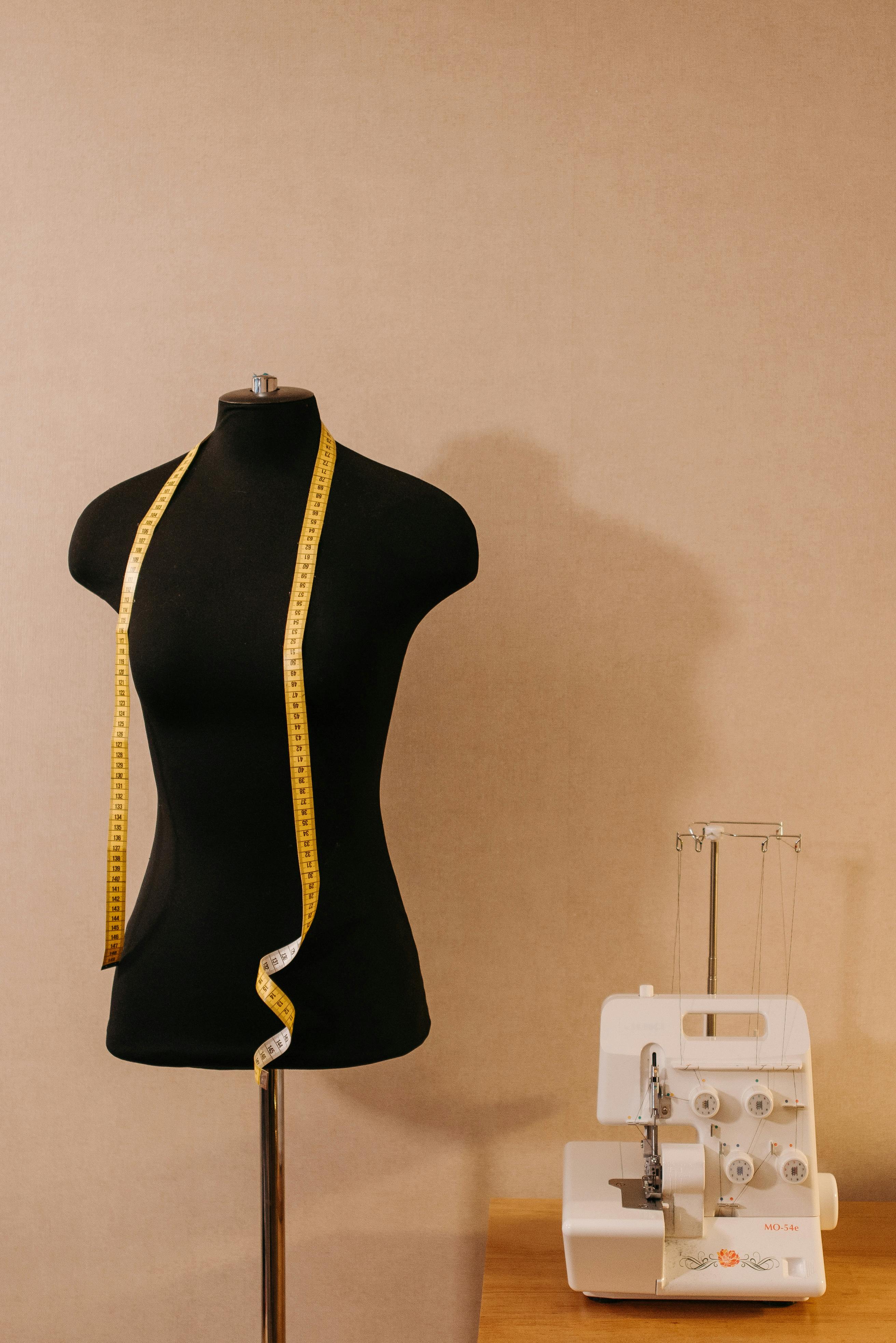
Hussein Bazaza in Mar Mikhael, four years after the explosion, three years into the currency collapse, still making couture at international standard.
Four years after the August 2020 port explosion that destroyed a third of Beirut, three years into a currency collapse that has wiped out most of the middle-class savings in Lebanon, and twelve months into a regional conflict that has kept most international buyers away from the city, Hussein Bazaza's atelier in the Mar Mikhael district is still operating. The couture is still being made. The clients who have been coming to Beirut for Bazaza's work for a decade — Lebanese expatriates in Paris and London and the Gulf, a small international client base that has learned what he does, the occasional serious editorial commission — are still coming. This is, under the conditions, remarkable. It is also, in the most direct sense, the reason the work matters.
Bazaza started the house in 2011, at twenty-five, after training at ESMOD Beirut and a brief period in Paris. The atelier has always been small — a handful of seamstresses, a dedicated embroidery workshop, the kind of staff-count that allowed for everything to pass through Bazaza's hands personally. The collections were initially bridal and occasion couture, which is the register Lebanese couture has traditionally operated in and which has historically been one of the Middle East's quiet strengths as a craft region. The Lebanese couture tradition — Zuhair Murad, Elie Saab, Rabih Kayrouz, several others — has, for reasons that have to do with a specific history of French-influenced textile and garment training in Beirut going back to the 1950s, produced some of the most technically capable couture work outside of Paris itself. Bazaza came up inside that tradition and has spent the last decade extending it in his own direction.
The direction has been, broadly, quieter than the Lebanese couture mainstream. Where Saab does the red-carpet register that has made him internationally famous, Bazaza's work has leaned toward a more restrained, more structurally considered couture — pieces that are still dramatic but that reserve their drama for specific moments of the garment rather than deploying it across the whole silhouette. A dress will be, from ten feet away, a plain column; the drama will be held in a specific embroidered panel at the shoulder, or in a single sculpted section at the waist, or in the way a back opening is resolved. This is work that rewards close attention, which is the traditional register of couture as it was practised in its pre-television era.
The atelier itself is the thing that has had to adapt. Mar Mikhael took serious damage in the 2020 explosion; Bazaza's workshop was not levelled but was significantly damaged, and the reopening in 2021 was done on a reduced scale, with the team that had remained after many of the younger staff had left Lebanon for work abroad. The currency collapse meant that paying the remaining staff in any way that retained them required creative arrangements — partial payment in dollars for senior staff, specific agreements around fabric sourcing since imported materials had become dramatically more expensive, a general reduction in collection size to match what the atelier could actually produce.
What the atelier has continued to produce, through all of this, is the work. Roughly two couture collections per year, at reduced size but at full technical standard. A small number of commissioned pieces for international clients who have continued to come to Beirut for fittings despite the various reasons to not come. Editorial commissions when they appear. The work has not declined in quality. If anything, by several of the international fashion editors who have continued to engage with the house, the work has become more focused under the constraints — there is less of it, but each piece is worked through more carefully.
The international press attention around Lebanese couture has, in the last few years, concentrated on two narratives: the destruction narrative (Beirut is no longer the city it was, the couture tradition is under threat, etc.) and the rebuilding narrative (the city is more resilient than anyone expected, the craft continues, the resilience is inspiring, etc.). Both narratives have some truth and both obscure the actual situation, which is that small ateliers like Bazaza's are operating under sustained conditions that neither destruction nor rebuilding captures. The conditions are not temporary. The atelier has been operating under them for four years and expects to operate under them for several more. The work continues at the pace the conditions allow, which is a slower pace than before, at a standard that has not been allowed to drop.
What this produces, in the pieces, is something that is genuinely worth looking at. A Bazaza piece made in 2023 is not the same as a Bazaza piece made in 2018 — the collections have narrowed, the techniques used have concentrated around what the atelier can still reliably produce, the aesthetic has become more confident in its restraint — and the recent work has a specific quality that the more expansive earlier collections did not have. The pieces are, in the proper sense, considered. Each decision has been made under pressure of time, resources, and the specific practical question of whether a given embellishment can actually be executed by the atelier as it now exists. The pieces that make it through this process are made to a standard that most couture houses, operating under easier conditions, do not quite reach.
For the international client looking for couture, the atelier remains one of the most serious options in the Middle East. Commissions are taken by appointment. The prices, given the collapse of the Lebanese pound, are lower in absolute terms than comparable Parisian couture — a full bridal commission at Bazaza runs in the low six figures in dollars, compared to several times that at the Parisian houses — and the work is, technique for technique, genuinely competitive.
For the observer of Lebanese culture more broadly, the atelier is one of the institutions that has refused to close. This is a category that now includes a small number of restaurants, a few bookshops, certain specific publishers, and a handful of ateliers like Bazaza's. These institutions are what Beirut has left of its pre-2020 identity as a regional cultural capital. That they are still operating is the reason the identity has survived. That some of them, like this one, are still producing work at international standard is the reason the survival is worth paying attention to.
Visit the atelier. It is in Mar Mikhael, above a commercial space, accessible by appointment. The couture is hung in a small showroom, and Bazaza or one of his senior staff will walk through the collection with the visitor. The work is worth the visit. So is, under the circumstances, the act of visiting.