Kari Voutilainen's Observatoire, fifteen years on
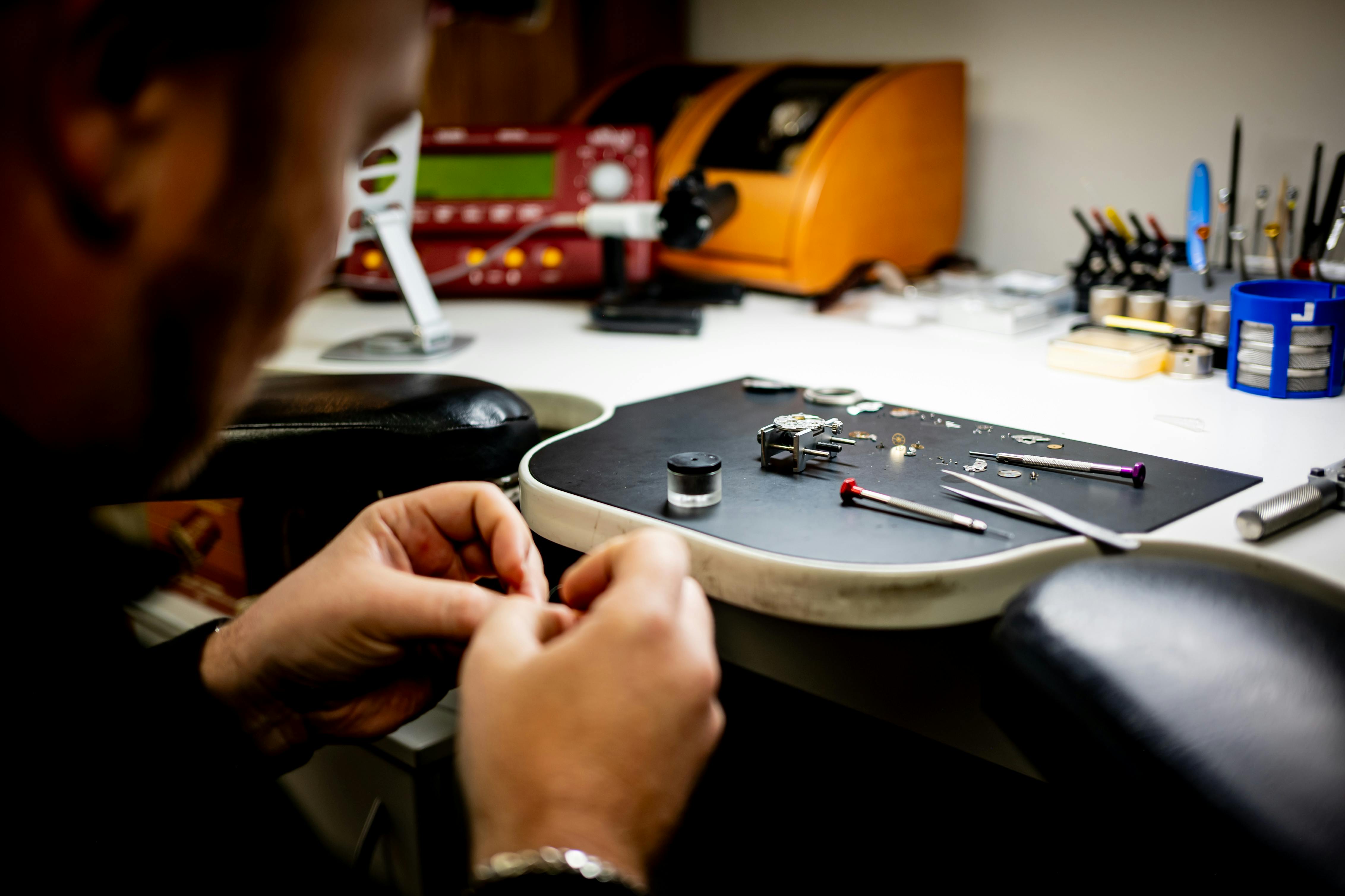
Fifteen years and fifty watches a year, and the case for independent watchmaking remains the same.
Kari Voutilainen makes about fifty watches a year from a workshop in Môtiers, in the Val-de-Travers, and has done so for long enough that the collector community has stopped asking whether he will scale and started asking whether he ever intended to. The answer, fifteen years into the Observatoire and twenty-five into his independent practice, is that the scale is the point.
The Observatoire is the watch that made Voutilainen's name in the wider collecting world. It was introduced in 2007, revised quietly over the following years, and built around a chronometer-grade hand-wound movement based on vintage Peseux calibres that Voutilainen finishes to a standard that most Swiss grand maisons reserve for their top-tier complications. The dial is guilloché, the hands are blued by hand, the case is understated and typically 38mm or 39mm depending on the specific reference. Nothing about the watch announces itself. Everything about it, on close inspection, is better than it needs to be.
Fifteen years after its introduction, the Observatoire is still the watch that collectors hold up when they want to make the argument for independent watchmaking. The argument runs something like this: the grand Swiss houses make excellent watches, but they also make a lot of them, and the economics of making a lot of watches mean that someone, somewhere in the process, is finishing a bridge less carefully than they would if they only had to finish five bridges a month. Voutilainen only has to finish a handful a month. You can see the difference under a loupe and, in some of the movement views, you can see it with the naked eye.
This is a claim that gets made often about independent watchmakers and is often overstated. It is not overstated about Voutilainen. The movement finishing is genuinely at a level that the large-house equivalents, even at the top end of their ranges, do not consistently match. The black polishing on the bridges is flatter. The anglage is crisper. The hand-bevelled edges catch light in a way that machine-finished edges do not. Fifteen years of Observatoires sitting in collections has given enough collectors enough time under loupes to build consensus on this, and the consensus has not softened.
What is interesting about the Observatoire specifically — as opposed to Voutilainen's more complicated pieces — is that it is a time-only watch. No chronograph, no minute repeater, no decimal display. The case, dial, and movement are the entire proposition. This is a harder watch to sell, in some sense, because there is no complication to justify the price. The buyer has to understand the finishing, or they will not understand what they are paying for. Voutilainen has built a career on the bet that enough buyers will understand.
The bet has paid off. Observatoires at auction now trade at multiples of their original retail prices, which were already substantial. Waiting lists for new Voutilainen pieces run years. The independent watchmaking category, which barely existed as a commercial proposition when Voutilainen went independent in 2002, is now a recognised tier of the market with its own auctions, its own collector forums, and its own increasingly well-funded buyers.
What has not changed is the workshop. Voutilainen still makes watches in Môtiers. The output is still about fifty pieces a year. The finishing is still done by hand, by a small team that includes Voutilainen and a handful of watchmakers he has trained. The proposition is still the same as it was fifteen years ago: a watch made by someone who knows what every surface should look like, produced at a pace that allows every surface to actually look that way.
The counter-argument is real. Independent watchmaking is unscalable by design. A watch that takes months to finish by hand can never be a watch most people can own, and building a collector culture around objects that most people cannot own has its own set of problems. This is a fair critique. Voutilainen has not responded to it and, based on fifteen years of evidence, will not.
The reason the Observatoire still matters, fifteen years in, is that it is one of a small number of watches that proves the independent argument is not just marketing. The finishing is better. The discipline is real. The watch made by fifty pairs of hands per year is different from the watch made by fifty thousand. Most collectors will not buy one. Most of them should at least look at one under a loupe, once, to understand what the argument actually is.