La Banchina and the case for the small wine bar
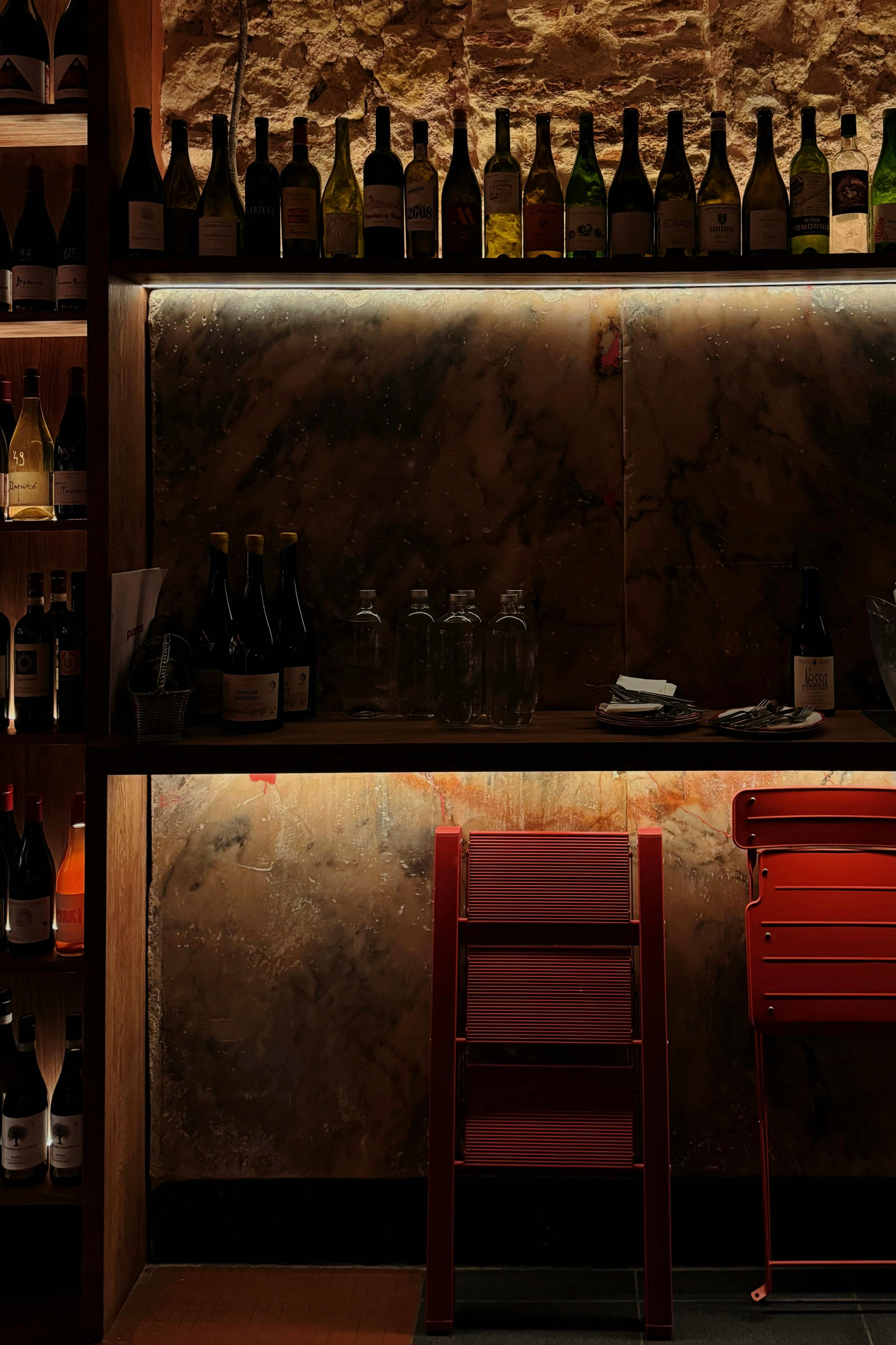
A wooden building at the end of a wharf in Refshaleøen, and the format the rest of Scandinavia has been copying for ten years.
La Banchina is a wine bar at the end of a disused wharf in Refshaleøen, which is to say at the edge of Copenhagen's harbour district, facing the water, with a small kitchen and a short wine list and approximately twenty-five seats. It has become, in the decade since it opened, one of the more influential small restaurants in Scandinavia, and its influence is out of all proportion to its size. Understanding why is the entry point to understanding what has happened to Nordic food culture in the last ten years.
The place itself is unprepossessing. A wooden building that used to be a boathouse, painted white, with a small outdoor deck that looks across to the city and a small indoor room that holds maybe fifteen people at a tight squeeze. The menu is a chalkboard. The wine list is natural, mostly, with a heavy lean toward small French and Italian producers. The food is a short list of small plates — cured fish, pickled vegetables, charcuterie, one or two hot dishes — that changes with what the local fishermen have brought in. The prices are not cheap. Nothing on the list is cheap. But the prices are also not absurd, and for the quality, they are correct.
What La Banchina did that mattered — and what a generation of small Nordic restaurants has since copied — was to build a restaurant around a specific proposition: that the best small restaurants do not aim to be miniature versions of the best large restaurants. They do not chase tasting menus. They do not chase Michelin. They are built around the specific pleasures of eating something considered, drinking something interesting, and spending a few hours at a table without the full machinery of fine dining being deployed around the experience.
The proposition sounds obvious when it is described. It was not obvious in 2014 when La Banchina opened, in the immediate post-Noma wave of New Nordic restaurants that were all, to varying degrees, trying to be small versions of Noma. La Banchina did the opposite: it aimed downward in ambition while aiming sideways in quality. The cooking was not technically ambitious. The wines were not prestigious. The room was not designed. What the place offered instead was a specific quality of attention — to the produce, to the pairings, to the pace of the meal — that the more ambitious restaurants in Copenhagen at the time were not, in some cases, actually delivering.
Ten years later, La Banchina's descendants are everywhere in Copenhagen and across Scandinavia. The wine bars that have opened in Vesterbro and Nørrebro in the last five years. The small seafood places in Aarhus. The natural-wine-focused rooms in Oslo and Stockholm. They all owe something to what La Banchina established: the idea that a small restaurant can be a serious restaurant without trying to scale up to Michelin ambitions.
What makes La Banchina itself still worth visiting, as opposed to eating at any of the newer places that have built on its template, is the setting. The wharf. The water. The proximity to Refshaleøen's other attractions — Noma was a short walk away until recently; Noma Projects is there now; Copenhagen Contemporary and Amass and the small breweries are all within a ten-minute walk. La Banchina sits in the middle of the most interesting food-and-culture cluster in the city, and it has the best waterside position of any of them.
Go in summer. The outdoor deck is the point. Eat lunch or late afternoon rather than dinner — dinner gets crowded, the reservations are hard, and the light on the water is better earlier. Order whatever the chalkboard says is good that day. Drink a bottle of whatever the server recommends from the natural-wine list. Take two hours over it.
In winter, the indoor room is smaller and warmer and has a different kind of charm — a bit like a boat's cabin, with the windows steamed up and the candles on the tables — and the menu shifts to heavier food. Braises, smoked fish, fermented vegetables. A different meal for a different season.
The case for the small wine bar, as a format, is that it does something that neither the casual restaurant nor the fine-dining restaurant does well: it creates space for a meal to unfold at its own pace, with food and drink calibrated to each other, without the performance pressure of a full dining-room experience. A good small wine bar meal takes two hours because two hours is what the meal wants. It is not rushed, not drawn out, not ceremonial. It is simply what that amount of food with that amount of wine, eaten with that amount of attention, takes.
La Banchina made the argument for this format in 2014. Ten years later, the format has won. The best new restaurants in every Scandinavian capital are small wine bars in La Banchina's tradition, and the most interesting food-and-drink experiences a traveller can have in Copenhagen or Stockholm or Oslo now are typically in rooms of this scale rather than in the full fine-dining restaurants.
Go to La Banchina. See where the template started. Eat the rest of the small wine bars in the city afterwards and notice how close they all are, still, to what this one place on this one wharf worked out a decade ago.