Rexhep Rexhepi's Chronomètre Contemporain, and the independent watchmaker case
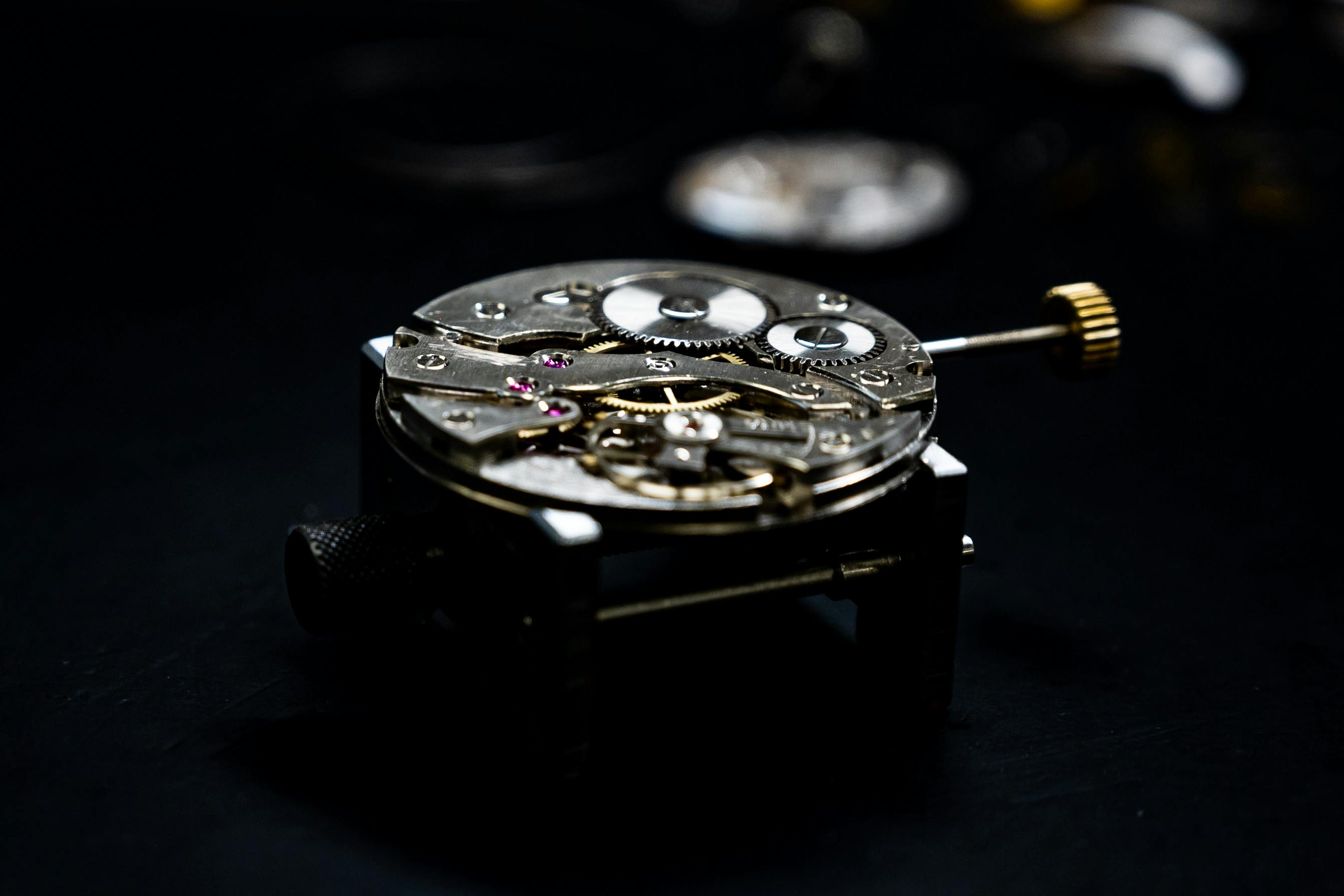
A 38mm time-only watch from a thirty-five-year-old in Geneva, finished to a level the grand houses now have to argue with.
Rexhep Rexhepi's Chronomètre Contemporain is not, strictly speaking, a radical watch. It has two hands, small seconds, a time-only display, a 38mm case, and a hand-wound movement visible through a display back. These are all conservative choices. What makes the watch remarkable is not any single element of it but the fact that every element is done at a level that, five years ago, the collector community would have said was not possible at the price.
The price is around 75,000 Swiss francs at retail, when retail is achievable, which it rarely is. Secondary market prices are higher.
To understand why this is interesting, you have to understand what the watch is competing with. At 75,000 francs, the buyer is in the territory of Patek Philippe's more serious time-only pieces, Lange's Saxonia with a complication, Vacheron's Patrimony range. These are the top-tier products of the grand Swiss houses, made by teams of watchmakers in facilities that have existed for more than a century, with movements that have been refined over generations and marketing budgets to match. A thirty-five-year-old independent watchmaker from Kosovo, working out of a small atelier in Geneva under his own brand Akrivia, should not be making a watch that holds up in that comparison.
He is. That is the interesting fact.
Rexhepi trained at Patek Philippe and BNB Concept before going independent. His first Akrivia pieces were tourbillons — technically impressive but, to some observers, slightly fussy. The Chronomètre Contemporain, introduced in 2018, was the piece that demonstrated he could do restraint as well as complication. The movement, the RRCC01 and its successors, is a traditional chronometer calibre with a deadbeat seconds option, finished to a standard that the collector community spent the first two years after its release arguing about. The consensus that settled is that the finishing is genuinely at the level of the best the grand houses produce, and in some specific areas — the black polishing, the inward-angle bevels — is arguably better.
This is the independent watchmaker argument in its strongest form. Rexhepi employs a handful of watchmakers. The watches are made in small series, fewer than fifty pieces a year for the Chronomètre Contemporain. Every component that can be finished by hand is finished by hand, by someone who has the time to do it properly because they are not finishing a thousand of them a month. The argument is that this is the only way to achieve the finishing level the watch actually has, and that the grand houses, whatever their craft standards, cannot match it at scale.
Collectors, having spent five years with the Chronomètre Contemporain, have broadly accepted this argument. Waiting lists for Akrivia pieces run into years. Secondary prices have risen steadily. Young independents with similar ambitions — Sylvain Pinaud, Simon Brette, Raúl Pagès — have attracted serious money almost immediately on the strength of the precedent Rexhepi established.
What the Chronomètre Contemporain demonstrates, beyond its own qualities, is that the independent watchmaking category has matured into something more than a niche for eccentrics. Rexhepi is a serious craftsman running a serious business at a serious scale, and the watches compete on quality with anything the major houses produce at equivalent prices. This was not true ten years ago. It was, arguably, not even true five years ago. It is now.
The case against the watch, if there is one, is that it asks the buyer to pay grand-house prices for a brand without grand-house history. In a market where a lot of luxury purchases are about signalling, Akrivia is a quieter signal than Patek. For some buyers that is the point. For others it is the problem.
For the buyer who has looked at the finishing under a loupe and decided they want the watch — as opposed to the buyer who wants the Patek because it is the Patek — the Chronomètre Contemporain is one of the best watches available today, at any price. Fifteen years from now, when the independent category has been fully normalised and every serious collection is expected to include one, this will look obvious.
It should probably look obvious now.