Roma Norte on a Sunday
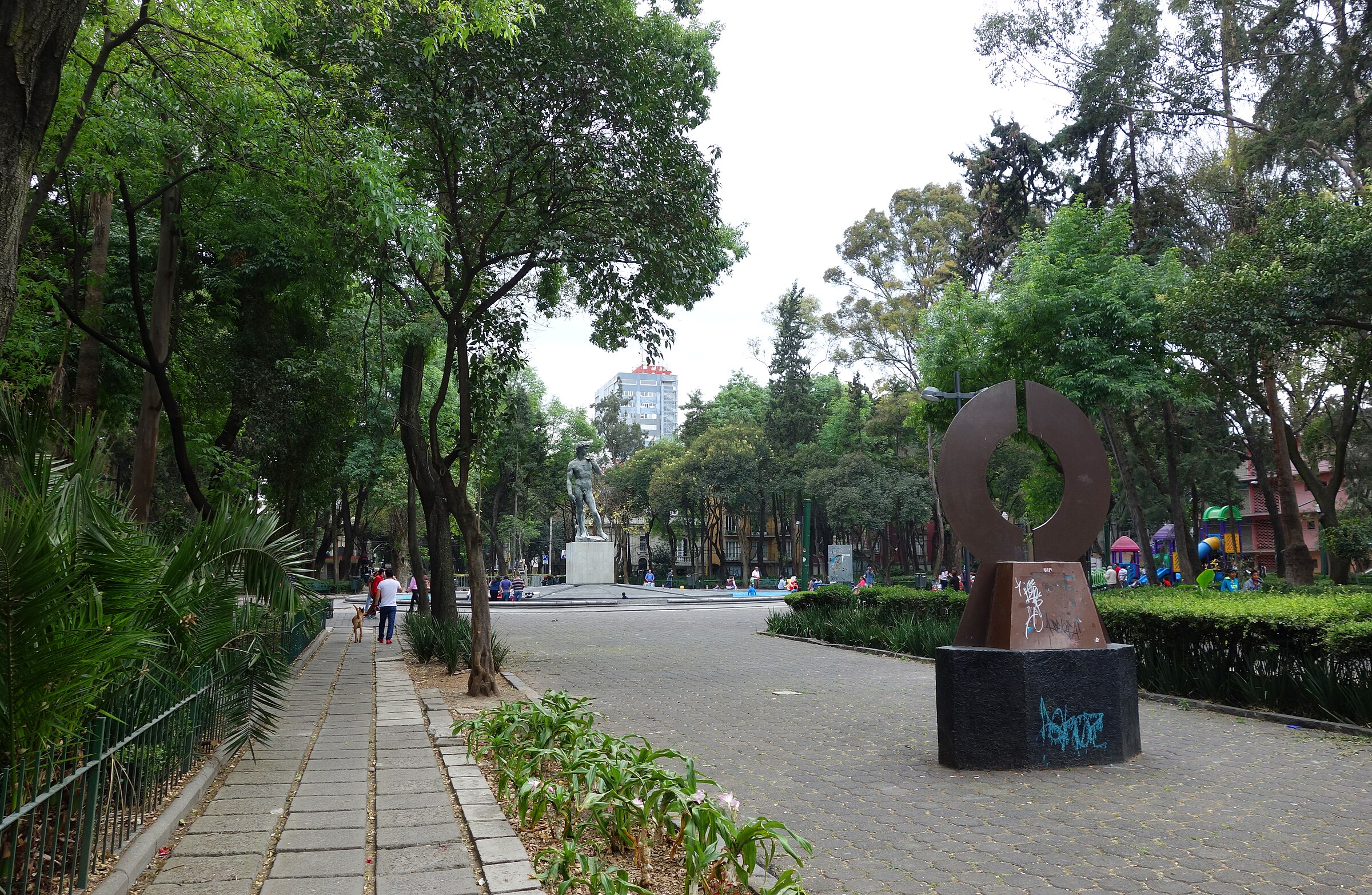
The Mexico City neighbourhood at its correct pace, walked from end to end with no plan.
Sunday is the day to walk Roma Norte. Not because anything special happens on Sunday — the cafés are open, the shops mostly are not, the park is the park — but because on a Sunday the neighbourhood slows to the pace at which it was designed to be walked, and the rest of the week it does not.
Start at the Plaza Río de Janeiro. The replica of Michelangelo's David stands in the centre of the fountain, which is a fact you either find charming or do not, but the plaza itself is small and tree-lined and ringed by Porfirian-era mansions in various states of preservation, which is the texture of the whole neighbourhood. Roma Norte was built around 1900 as an upper-class residential district, modelled loosely on Haussmann's Paris, and then it was ruined — by the 1985 earthquake, which took out several streets' worth of buildings, and by the decades of subsequent neglect. In the last twenty years it has come back, partially, in the specific Mexico City way where restoration happens piecemeal and the ruins and the fresh paint sit next to each other without either winning.
Walk south on Orizaba. The street runs the length of the neighbourhood and touches most of what there is to see. Pastelería Ideal's original location is a block off it, and while the pastries are not why you came, the building is — a wedding-cake Belle Époque façade painted in the colour it was painted a hundred years ago. Keep walking. Mercado Roma is on the right, which is a food hall, which is fine if you are hungry but not why you are here on a Sunday.
Coffee at Cardinal, on Córdoba. The coffee itself is serious — Mexico has, in the last decade, produced a specialty-coffee culture that rivals anywhere else on the continent — but the room is the point. High ceilings, tile floors, a former house, the kind of space that Mexico City gets right more consistently than any other capital. Sit by the window. Order something. Read. An hour passes. This is what Sunday in Roma Norte is for.
Lunch at Contramar, if you have booked, which you should have. Contramar is not a secret — every food writer in the English-speaking world has written about it — but it is, somehow, still good. The tuna tostadas are what people come for, and they are worth the ordering, but the whole fish grilled on the plancha is the better choice for a long lunch. The room is loud. The tables are close together. The wine list is short. The meal takes two and a half hours because Contramar takes two and a half hours.
Afterwards, walk it off in the Parque México, which is a block of deliberate 1920s greenery designed around what used to be a racetrack. Art Deco apartment buildings ring it. Dogs run everywhere on Sundays. The bandstand at the centre sometimes has musicians. The park is, for reasons that are hard to articulate, the most Mexican place in a part of the city that spends a lot of its energy looking European. Something about the scale, or the light, or the way children run in packs here in a way they do not anywhere else.
The afternoon is for bookshops and browsing. Under the Volcano Books, if you read English. Pendulo Condesa, a walk west into the next neighbourhood, for Spanish and atmosphere. Mercería La Elegante, for the sake of having been in a haberdashery that has been open since 1907.
Dinner, if you are still hungry, at Rosetta — the most carefully considered cooking in the city, in another restored house — or at Máximo Bistrot, or at one of the dozen smaller places that have opened in the last five years and will close in the next five. Do not try to plan dinner in advance. Walk until something opens in front of you.
What makes Roma Norte specifically worth visiting, as opposed to any other Mexico City neighbourhood, is that it is the neighbourhood where the city is currently figuring out what it wants to be. It is the place where the money that stayed in Mexico City through the difficult decades is now being spent. The architecture is being restored. The food is being taken seriously. The streets have reached a critical density of interesting things without yet tipping into the kind of over-visited territory that Condesa next door is beginning to feel like.
Go on a Sunday. Stay for the day. Do not plan it too carefully. Come back again on a Tuesday, six months later, and notice what has changed. Something will have.