Studio Porcelain and the Amsterdam Quiet-Luxury Argument
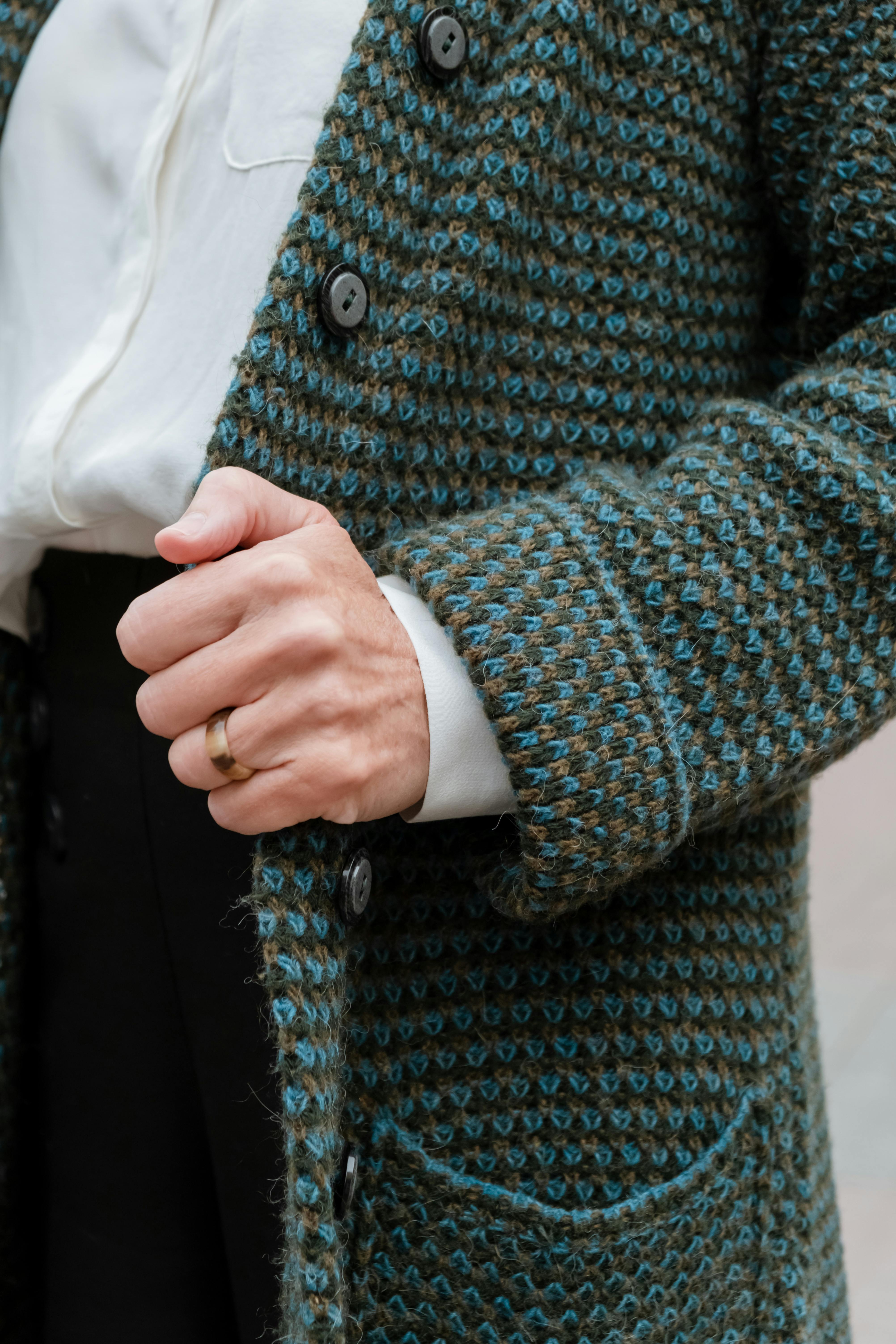
The Margiela alumni making the most coherent quiet-luxury work currently in production — at the prices that prove the category was misunderstood.
The quiet-luxury conversation, which has now been going on for approximately long enough that the phrase itself has started to feel noisy, is usually held in one of three cities: Milan, London, or New York. The cities are chosen because they contain the houses that the conversation is primarily about — Brunello Cucinelli, Loro Piana, The Row, Totême and its northern-European competitors, the usual list. Amsterdam is not on the list. Amsterdam is where, over the last five years, the conversation has quietly been advanced further than in any of the cities that are on it.
Studio Porcelain is the clearest case. The house was started in 2018 by two former Margiela designers — the names are not widely known outside the trade, which is consistent with what they are doing — and operates out of a workshop in the east of the city, producing a small collection each season of garments that are, by the standards of the quiet-luxury conversation, unusually coherent. Cashmere coats in three weights. Tailored trousers in a small number of cuts. A specific knitwear programme using yarns sourced from one Italian mill. A few dresses. The collections are not seasonal in the traditional sense; pieces are added and retired slowly, over years, with the kind of pacing that fashion houses at this tier rarely attempt.
The clothes are expensive. This is worth naming. Studio Porcelain sits at the upper end of the price spectrum — a coat starts at around three thousand euros, a cashmere jumper at around six hundred, a pair of trousers at around nine hundred. These prices are consistent with the house's peers in the quiet-luxury category and are, for the actual quality of the work, defensible.
What makes Studio Porcelain specifically interesting, as opposed to the broader quiet-luxury category it fits within, is the Amsterdam-specific quality of its proposition. The Dutch have been arguing, for roughly twenty years, for a specific kind of design discipline — minimalist but not austere, technical but not ostentatious, comfortable with the body rather than imposing on it — that the Italian and French luxury houses have, most of the time, not quite managed to absorb. The work of designers like Martin Margiela himself (who trained in Belgium but whose influence on the Dutch scene has been considerable), or Viktor & Rolf in their more restrained moods, or the quieter part of Iris van Herpen's range, has informed what a generation of Amsterdam designers now treat as the baseline house grammar. Studio Porcelain works in that grammar.
The specific Dutch quality shows in the cut. The shoulders on a Studio Porcelain coat are lower than the shoulders on a comparable Italian coat, and set differently — they follow the wearer's actual shoulder line rather than imposing the architectural shoulder that Italian tailoring tends toward. The trousers sit slightly higher at the waist, with a slightly fuller cut through the thigh, and taper to a closer ankle. The dresses are cut close through the body but give at specific points — the shoulder, the elbow, the lower back — where a cheaper cut would not. These are technical choices. They are also, cumulatively, what makes wearing a Studio Porcelain piece feel different from wearing its more-discussed competitors.
Who is buying the clothes is another tell. The house's customer base, from what the founders have said in interviews, is heavily Northern European — Dutch, Belgian, Scandinavian, German — with secondary markets in Japan and among the Americans who have, over the last five years, discovered the second tier of quiet-luxury producers that exists below the very visible top tier. There is, interestingly, no significant customer base in Italy; the Italian customer for this category is being served by Italian houses, and Studio Porcelain has not, as yet, attempted to compete there. This seems like the right commercial choice. The house is profitable. The Amsterdam workshop has, over six years, grown from two founders to a small team of perhaps a dozen, which is the size at which quiet-luxury production seems to stabilise before pressure to scale changes the product.
The larger claim Studio Porcelain is implicitly making — and which is worth articulating, since the house itself does not make it in its own marketing — is that the quiet-luxury proposition has been misunderstood by the big Italian names. Brunello Cucinelli makes, genuinely, some of the finest cashmere in the world. Loro Piana's materials are extraordinary. The Row's pieces are cut to a standard most contemporary fashion houses cannot reach. But the quiet-luxury register has, at the commercial top of the category, become a specific aesthetic — long, slouchy, beige, deliberately unadorned — that is now legible as itself a kind of statement. Studio Porcelain is making work that is genuinely quiet, in the sense that it does not announce itself even as quiet, and that distinction is the one the commercial top of the category has lost.
Whether this matters to the reader is a specific question. If the reader wants clothes that are legibly quiet-luxury — that can be recognised, by other people who know the codes, as expensive and considered — Studio Porcelain is not ideal, because the work does not read that way to most viewers. The coats do not look, from across a room, like a Loro Piana coat looks. If the reader wants clothes that are genuinely quiet, in the sense of being beautifully made and comfortable to wear without communicating anything particular about the wearer's position in the luxury economy, Studio Porcelain is, arguably, the most serious option available.
The house will not scale aggressively. This is clear from both the founders' statements and the evident structure of the operation. What it will do, probably, is continue to produce small collections for a stable customer base that has discovered it and is not particularly interested in sharing. This is a specific business model, and in the current fashion economy, an increasingly viable one.
Go to Amsterdam. The shop is in the east, in a converted house on a canal, not marked from the street. The shop staff will tell you what the current collection is and what is coming next and what is being made for specific clients. You will not see the house in any of the places the quiet-luxury conversation is usually held. You will see it, eventually, on a specific kind of customer in New York or Milan or Tokyo, and you will recognise the cut before you recognise the house.
That is the argument.