Tender Co. and the Last Argument for British Denim
Fifteen years of William Kroll making jeans by hand somewhere in the English countryside, and what the resulting garments have become.
William Kroll started Tender Co. in 2009 in a room in south London, with a sewing machine and an idea about making denim in a way that the British denim industry had largely stopped making it. He was twenty-five. He had trained at Cordwainers and worked briefly for another British denim maker before deciding that the jeans he wanted to wear were not, in his view, being made anywhere he could buy them, and that the only solution was to make them himself.
Fifteen years later Tender Co. is still run by Kroll, out of a slightly larger room somewhere in the English countryside, making jeans and jackets and shirts by hand in quantities that he has carefully kept small. The company is, by any reasonable metric, one of the last arguments for British-made denim as a category distinct from American or Japanese denim, and the argument is specific, and the argument is worth making.
The British denim tradition, such as it is, is largely a twentieth-century invention. Denim itself is American; the weaving tradition in the British Midlands during the industrial era produced cottons and wools, and even the denim mills that did operate in Britain in the post-war period produced, mostly, fabric for workwear rather than for fashion. What Britain had that Italy and America did not was a specific tradition of hand-finishing — tailors, cutters, and dyers whose training was in other areas of textile production but whose techniques could be applied to denim by a maker who knew what he was looking for. Kroll, at Tender Co., has been making that application for fifteen years, and the resulting garments are genuinely distinct from what the American and Japanese denim traditions produce.
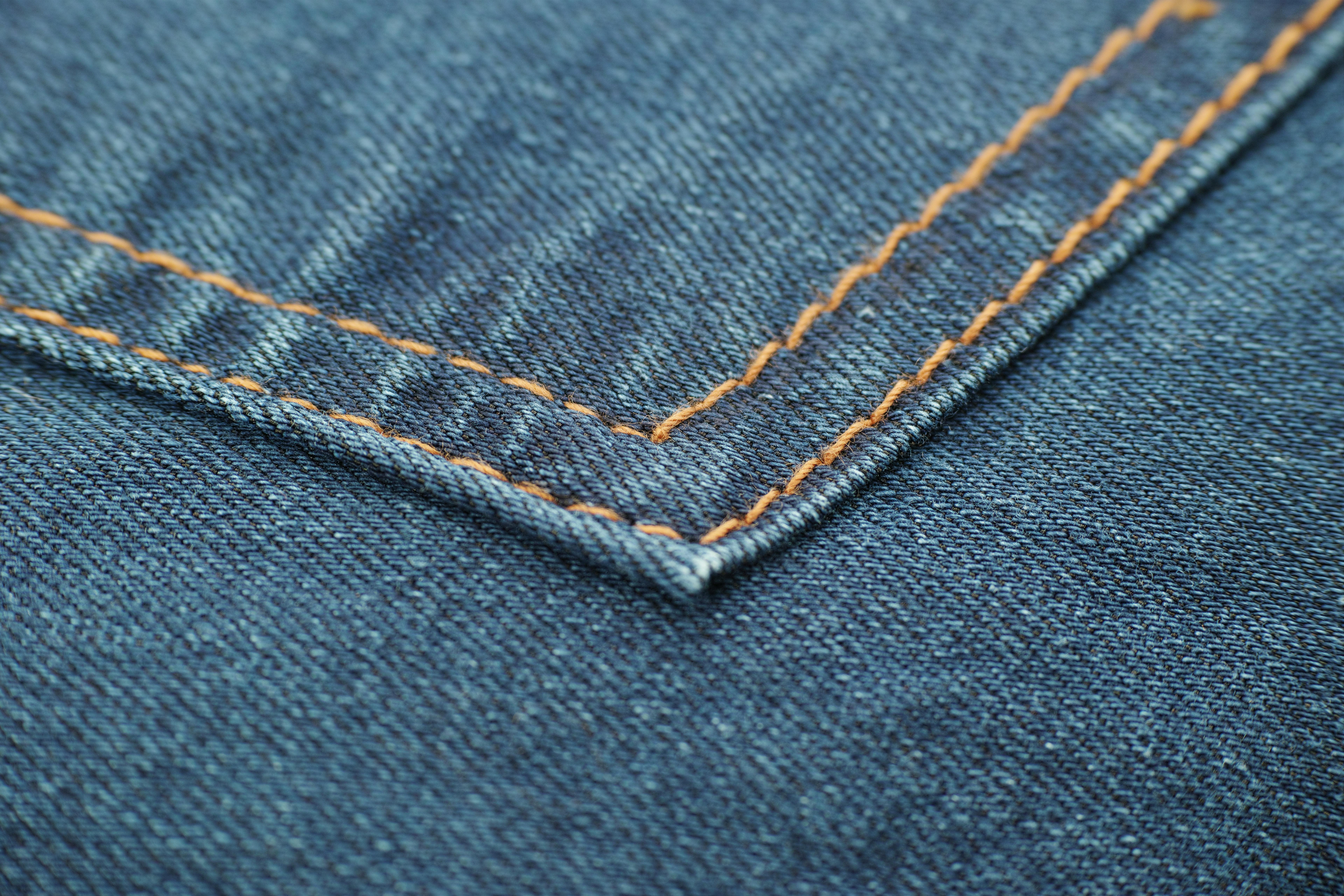
The differences are specific. Tender's denim is woven on narrow shuttle looms, which is not unusual among selvedge denim makers — the Japanese houses do the same — but the cotton Kroll uses is sourced differently, dyed differently, and finished differently. The dye is, in most of the Tender range, natural indigo rather than the synthetic indigo that dominates the commercial denim industry. The natural indigo fades differently than synthetic: slower, less dramatically, with a specific character that becomes visible only after years of wear. The finishing is done by hand, often with techniques borrowed from British tailoring rather than from American workwear — bar-tacking in specific places, reinforced seams done the way a tailored jacket would be reinforced, buttonholes sewn by machines that are older than most of Kroll's customers.
The jeans themselves are, once you have worn a pair for a year or two, genuinely different from any other pair of jeans in a wardrobe. They fade in a specific way. They wear in specific spots. The weight of the denim — Tender's range includes some of the heavier weights in production anywhere, in the 18- and 19-ounce range — produces a garment that, once broken in, has the specific drape of a pair of trousers rather than the looser drape of most jeans. This is what Kroll was after. This is what the jeans do.
The price reflects the production. Tender's jeans run between three hundred and four hundred pounds, depending on the model and the weight. This is not cheap; it is also not, relative to what similar small-production American or Japanese denim costs, expensive. The value proposition is that the jeans last much longer than mass-produced alternatives — a pair of Tender 132s from 2014, worn weekly, will now be at the beginning of its prime rather than at the end — and that the garments, once broken in, become specific to the wearer in ways that cheaper denim cannot reproduce.
Who is buying the jeans is its own small study. Tender Co.'s customer base is, by Kroll's own account in interviews, heavily weighted toward men in their thirties and forties who own few pieces of clothing but care intensely about the ones they own. There are some women buyers, a growing number. There is a specific quiet customer segment in Japan, where appreciation for this kind of work is more developed than in most of Europe. There is, increasingly, a customer base in the Gulf states among men who have discovered the jeans through the general rising interest in artisan menswear.
What the company has not done, and what distinguishes it from most of the small denim makers who have opened and closed in the last fifteen years, is scale. Kroll has kept Tender Co. small enough that every garment is either made by him or made under his direct supervision. The company produces perhaps a few thousand pieces a year across its full range. This is, intentionally, not the model that allows for international distribution or retail expansion. It is the model that allows for the quality the company is trying to produce.
The argument the company is making — and the reason it is worth writing about now, rather than waiting for the heritage piece that will eventually be written about Kroll when he retires — is that the British denim tradition is not actually gone. It is smaller than it once was. It is supported by fewer people than it once was. But the knowledge has not disappeared, and the work is still being done, and the jeans produced by this work are, for the people who wear them, specifically better than the alternatives.
Buy a pair. Wear them for five years. Notice what they become.
Most of the clothes in most wardrobes are not worth that kind of time. These ones are.