The case for a 1970s Datejust over any new Rolex
The most interesting Rolex available is not available now. It is available, but it was made forty years ago.
The most interesting Rolex available today is not available today. It is available, but it was made between roughly 1973 and 1984, and the best examples go for less money than a new Submariner.
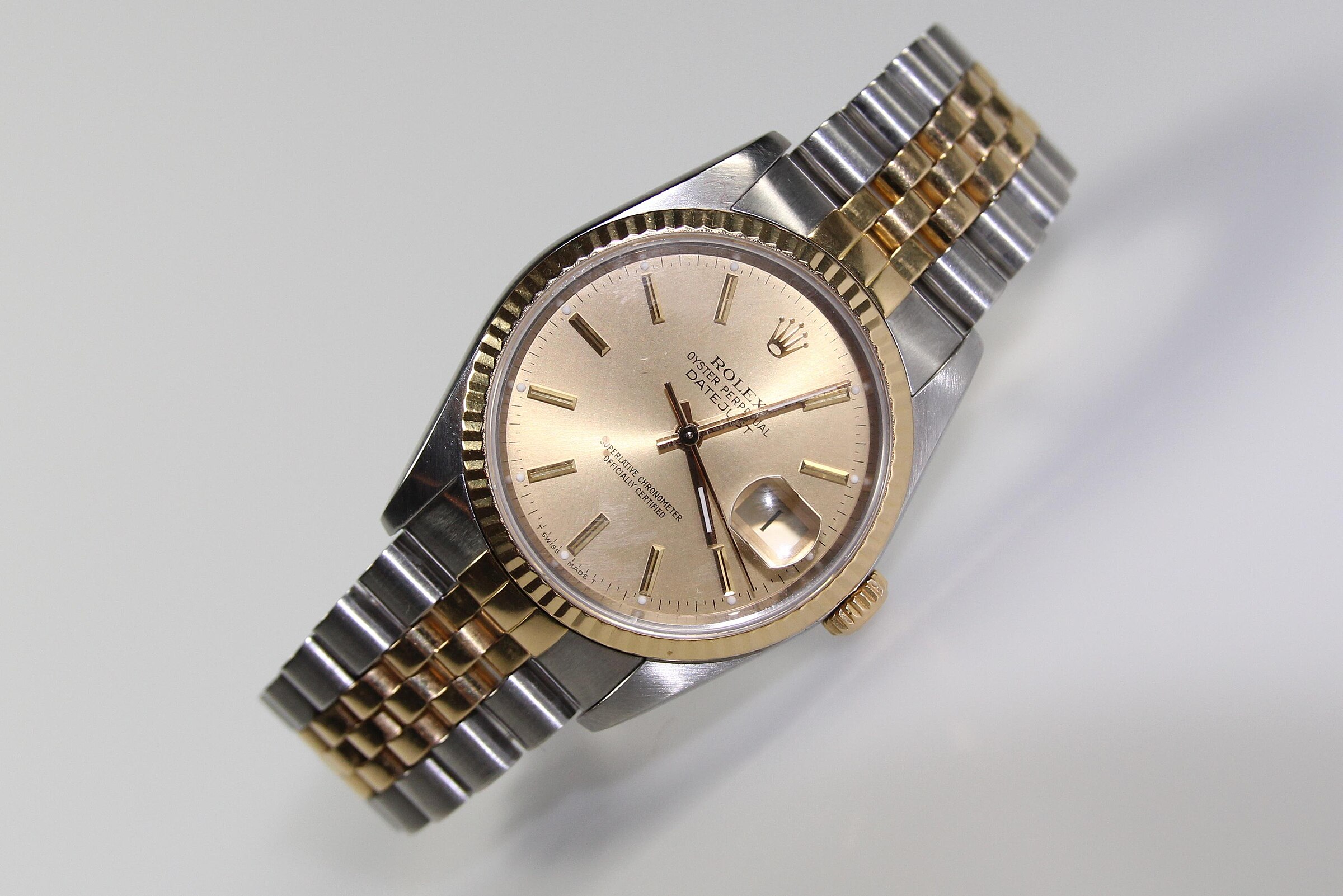
This is the Datejust reference 1601, 16014, or 16030, depending on the year — the quickset-date variants produced during the decade that Rolex moved from the acrylic-crystal, manual-sizing era into the sapphire-crystal, automatic era. The watch is 36mm, the case is steel or steel-and-gold, the bracelet is Jubilee or Oyster, the dial is in whatever colour the market happened to want that year. The movement is the 1570 or 3035, both of which have been serviced continuously for forty years by Rolex and independents and will continue to be for another forty. A good example, with its original dial and hands and a recent service, costs between five and eight thousand dollars.
A new Datejust 36 from Rolex, at retail, is twelve thousand dollars if you can find one at retail, which you usually cannot. Grey market prices are higher. The new watch has a sapphire crystal, a more modern bracelet clasp, the current Rolex movement, and the Rolex warranty. The vintage watch has, depending on the specific reference, an acrylic or sapphire crystal, an older-spec bracelet, the 1570 or 3035 movement, and four decades of service history that is entirely knowable.
The argument for the vintage piece is not about nostalgia. It is about what the watch is actually like to own.
The 36mm case is the correct size for a wrist. It sat at 36mm from 1945 until Rolex introduced the 41mm Datejust II in 2009, and the 41mm version has not been well received by the collectors who matter. The 36mm Datejust is the template for what a dress-adjacent everyday watch should measure. Wearing a 1970s example reminds you how confidently the dimensions were chosen, decades before the oversized period and decades before the correction back to vintage sizing. The watch sits under a cuff. It disappears on the wrist. It reads the time instantly. This is what a Datejust is for.
The movement situation is better than most buyers realise. The 1570 is a pillar calibre from the most disciplined period of Rolex movement production. It has been serviced continuously since its introduction and has established parts availability that will outlast almost everyone reading this. The 3035, which replaced it in 1977, added a quickset date and remains a workhorse. Both are less complicated than the current Rolex movements. Both are less likely to develop the kinds of failures that more sophisticated movements develop. Service costs are reasonable. Independents who know these calibres are everywhere.
The dial is the point of connection to the specific watch. A 1970s Datejust dial, forty years after it left the factory, has a specific character that a new watch cannot replicate. The tritium indices have aged into warm off-white, sometimes into cream, occasionally into the muted orange that collectors pay extra for. The dial text has the typography of the period. Sunburst finishes have softened slightly. None of this is damage; it is patina, and it is the thing that makes the watch look like a watch someone has owned, rather than a watch someone has just bought. The new Rolex, however competent, will not look this way for forty years.
The objection to the vintage piece is real and worth stating. It is a forty-year-old watch. Things go wrong. Water resistance, even after service, is lower than a new piece. The crystal, if acrylic, scratches. The bracelet stretch is a real phenomenon and the cost of a replacement Jubilee bracelet is meaningful. The buyer who wants the reassurance of a warranty and the confidence of a factory-fresh piece should not buy vintage.
But for the buyer who wants the Datejust that Rolex designed during the period when the Datejust was most coherently designed — correctly sized, restrained, and made with the discipline of an era when Rolex had not yet begun optimising every decision for margin — the 1970s references are the ones to own. They cost less than the new equivalent. They will not depreciate further. They can be serviced forever. They look like watches, rather than like products.
The new Rolex will be fine. The 1970s Rolex will be better, and cheaper, and is available now.