The Last Savile Row Apprenticeship
Anderson & Sheppard, Henry Poole, Huntsman — the houses that still take seven years to make a master cutter, and what the apprenticeship actually involves.
The Savile Row apprenticeship is one of those things that is spoken about in the fashion press as if it were already gone, and the fact that it is not gone — that a handful of houses still train cutters and tailors through a three-to-seven-year indenture, in rooms above shops on a street in Mayfair — is the kind of detail that has to be confirmed every few years before it is believed. Anderson & Sheppard still trains. Henry Poole still trains. Huntsman still trains. The numbers are small. The last batch of fully qualified master cutters to come out of the system, depending on how you count, is in the single digits for any given year across the whole Row.
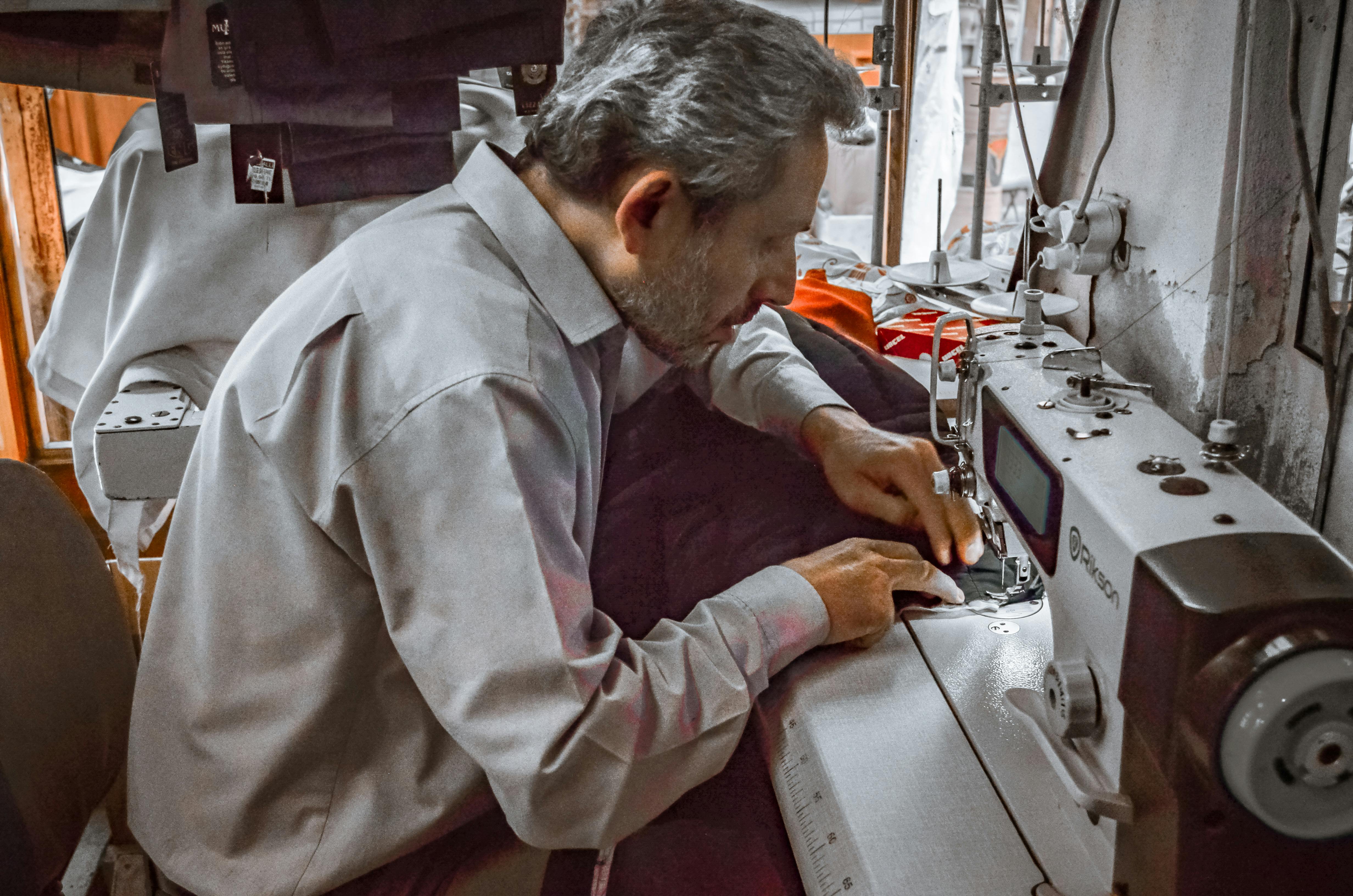
What an apprenticeship on Savile Row actually involves — as opposed to what the phrase suggests — is a long initial period of doing the work nobody else wants to do. Sweeping the floor. Running pattern pieces between rooms. Basting. Hemming by hand. The first year is, by the accounts of several recent apprentices, mostly invisible labour, the point of which is to prove that the apprentice will still be there at the start of the second year. This is the filter. Most people who start do not finish. Those who finish the first year are given, slowly, more responsibility: the linings, then the sleeves, then the trousers, then eventually, years in, the first full jacket made start to finish under supervision.
The women who have come through this system recently — and it is, as of the last decade, finally not an exclusively male occupation — describe the apprenticeship in a specific way. They talk about the repetition. About the hand positions. About the small physical movements you make with a needle ten thousand times before you do them without thinking. About the particular tiredness of a first year doing invisible work for a master who is, on most days, not especially interested in explaining what you are doing or why. About the satisfaction, eventually, of understanding what the invisible work is for.
What the apprentices who finish describe, when they're asked, is a specific moment several years in. It happens on a sleeve, or a lining, or a basted shoulder — somewhere in the second half of the indenture, when the hands have repeated the motions enough times that they've stopped being conscious. Before that point, the apprentice is making a sleeve. After that point, the apprentice is making a sleeve for a person, and the difference is everything. The senior cutters describe this transition as the moment they consider an apprentice to have actually begun. The years before it are preparation. The years after it are the work.
This is, I think, the thing that most writing about Savile Row misses. The coverage tends to focus either on the heritage narrative — the old houses, the long client lists, the royal warrants, the sense that something precious is being preserved — or on the decline narrative — the closures, the shrinking customer base, the difficulty of explaining to a twenty-three-year-old why the work is worth the five or seven years. Both narratives are largely true. Neither is particularly interesting after the third time it has been written.
What is interesting is what the apprenticeship actually produces, which is a specific relationship between the tailor and the garment that the mass-produced tailoring industry does not and cannot produce. The apprentice-trained cutter has, by the time she is qualified, made perhaps fifty jackets entirely with her own hands. The shoulder of the fiftieth is different from the shoulder of the fifth, and she can tell you why, and the difference is visible to clients who have worn both.
Whether this is economically sustainable is a separate question. Savile Row bespoke, at the top of the market, is expensive: four thousand pounds for a suit at the less-priced houses, seven or eight for the more prestigious, up into five figures for the specialised work. The customer base is global and has not, in the last decade, significantly shrunk. But the cost structure of training a new generation through the full indenture — seven years of below-market wages, for a trainee who may not finish, on top of senior cutters whose time is worth more spent on clients than on teaching — is hard, and the houses that still run proper apprenticeship programmes are doing so partly as an act of house identity rather than pure commercial logic.
The argument for the apprenticeship, in the end, is not economic. It is that a cutter who has not come through this training does not make the same garment as one who has. You can see the difference under the arm. You can see it in how a shoulder sits after two years of wear. You can see it in the way a jacket that has been made by hand sits on a body versus the way a jacket made by a more efficient process does. The difference is small. It is not nothing.
For the client who cares about the difference — and most clients of Savile Row houses do, which is why they are clients — the apprenticeship is the reason the clothes exist in the form they do. For the apprentice herself, the experience is harder to summarise than the heritage narrative makes it sound. It is mostly hands. It is mostly hours. It is mostly the invisible work that the apprentice does not understand the point of until she is, several years in, making something for someone and the understanding arrives.
The work continues, quietly. The houses train who they can train. The apprentices who stay become, eventually, the cutters whose names the next generation of trainees will learn. The street has been doing this for two centuries, and while the numbers are smaller than they once were, they are not zero, and the distance from zero is what matters.
Visit the Row. Stand outside one of the older houses on a weekday morning and look up at the upper floors. Someone is cutting. Someone else is basting. The work happens there the way it has always happened there, and the thing nobody particularly notices, which is what makes it interesting, is that it is still happening.