The revival of Scandinavian joinery, twenty years after it supposedly ended
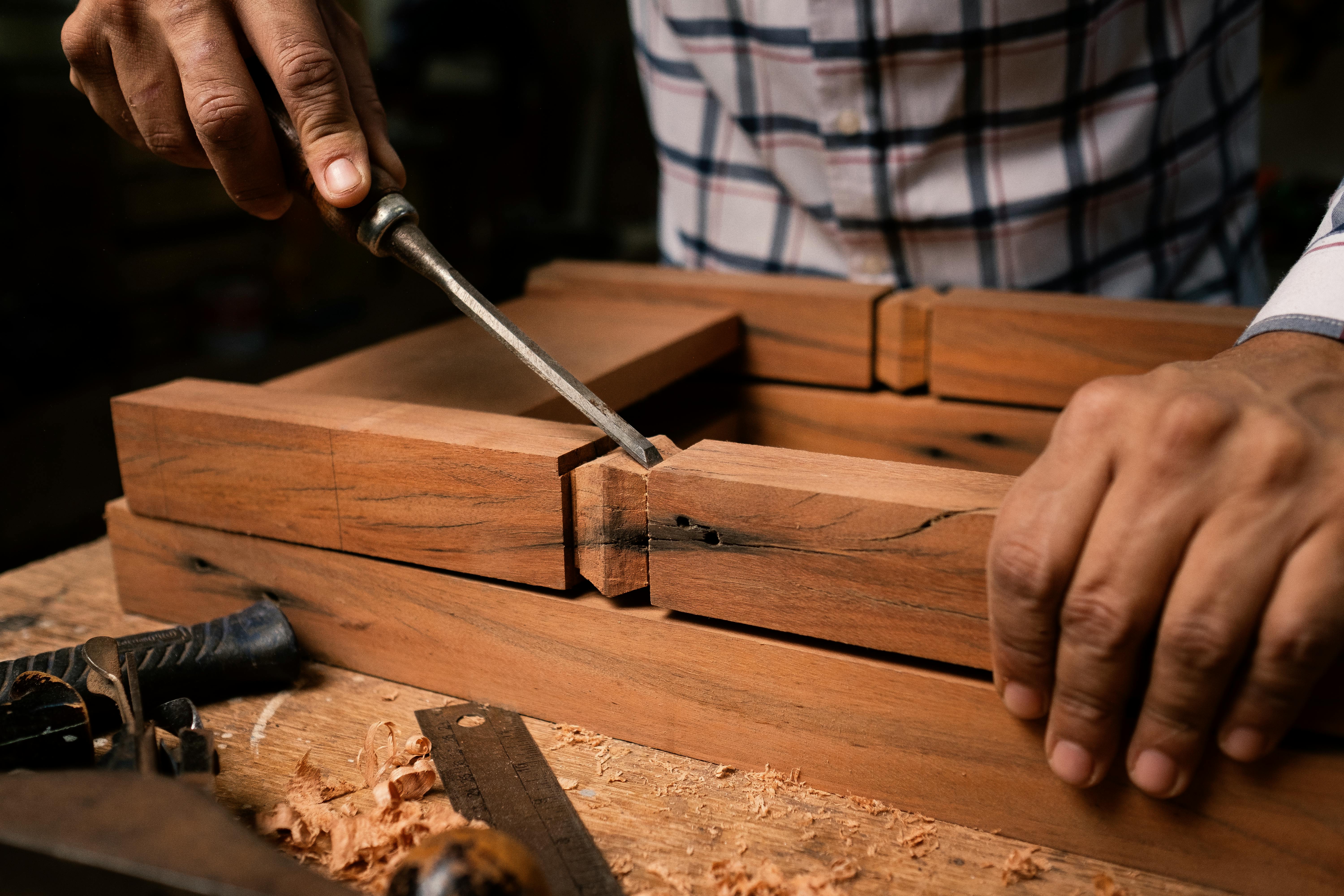
The end-of-craft narrative was wrong. The decentralised studios kept the apprenticeships running. The work continues.
The end of Scandinavian joinery as a living craft tradition was announced, in various publications, over a roughly twenty-year period starting in the late 1990s. The narrative was consistent across the coverage: the great Danish cabinet-making workshops that had produced the Klint, Wegner, Juhl, and Mogensen pieces were closing; the younger generation was not entering the apprenticeships; the specific knowledge of hand joinery — the dovetail patterns, the precise fitting of the through-tenons, the finishing techniques that defined the twentieth-century Danish tradition — was going to be preserved as historical knowledge rather than as active practice. By around 2005 the narrative had congealed into consensus. The craft was, in effect, over.
Twenty years later, the craft is not over. It is smaller than it was in 1960, when the Danish cabinet-making industry was at its mid-century peak and was the largest single sector of Denmark's design economy. It is structured differently than it was — the large workshops are mostly gone, and what remains is a network of small studios, each with two to six joiners, operating across Denmark and Sweden and increasingly Finland. But the craft is being practised at a level that, on close inspection, is essentially indistinguishable from the mid-century high point. The apprenticeships did not end. The knowledge did not disappear. What happened was more complicated than the end-of-craft narrative allowed for, and the current moment — in which young joiners are actively entering the field, small studios are receiving international commissions, and the technical standard is arguably as high as it has ever been — is worth understanding on its own terms.
The actual history, as opposed to the obituary that was written for it, goes roughly as follows. The large Danish workshops that had defined the mid-century period did, in fact, mostly close or consolidate during the 1980s and 1990s. The economics of hand joinery against industrial production had become unsustainable at the scale those workshops had operated. A cabinet maker in a large workshop producing high-end furniture could not compete on price with industrial manufacturers, and the high-end furniture market, while still functioning, was too small to support the workshop structure that had developed during the mid-century boom.
What happened, over the subsequent two decades, was that the craft decentralised rather than died. The joiners who had trained in the large workshops went into smaller practices. Some started their own studios. Some joined small existing studios. The training structure — the formal apprenticeship system that had produced mid-century cabinet makers — adapted into a less formal but still functional network, in which young joiners learned the craft from senior joiners at small studios rather than from master cabinet makers at large workshops. The knowledge transferred. The pace slowed. The output, per capita, dropped.
What the current moment looks like, on the ground: there are somewhere between forty and eighty small joinery studios operating across Scandinavia, depending on how one counts and what one counts. Most employ between two and six joiners. Most produce a small number of pieces per year, with the work divided between commissioned furniture for private clients, limited-edition pieces for design galleries, and collaborative work with contemporary designers who have returned to hand joinery as a production method for specific pieces. The prices have risen considerably. A hand-joined Danish dining table from one of the current studios now costs roughly what the mid-century equivalents cost in their own era, adjusted for inflation, and is made to the same technical standard.
The international market has, in the last five years, begun to recognise what has happened. The current Scandinavian hand-joinery studios are increasingly producing for international clients — American collectors commissioning specific pieces, Japanese retailers carrying small production runs, a growing European market among serious furniture buyers who have learned to distinguish between industrial and hand-joined work. The pieces are traveling. The apprenticeship network, which had quietly continued through the decentralised period, is now producing young joiners who are being placed into the studios at a rate that suggests the tradition is not merely surviving but growing.
What the current joiners are producing is worth describing. The work is, in most cases, recognisable as continuing the mid-century Danish tradition — the proportions, the wood selection (mostly oak and walnut, some cherry, occasional specialised woods), the specific joinery details. But there are meaningful departures. The current generation has, broadly, moved away from the formal dining and sitting furniture that defined the mid-century output and toward more utilitarian categories: kitchens, built-in storage, writing desks, occasional tables. This reflects both the current market (commissions from private clients tend toward these categories) and a specific aesthetic choice (the younger joiners are less interested in the formal furniture vocabulary and more interested in everyday furniture executed at the full technical standard).
The international visibility of this work has been slow to develop, partly because the studios operate quietly and partly because the kind of furniture they produce does not generate the fashion cycle that design press typically amplifies. A commissioned kitchen in oak, hand-joined, is not news. A commissioned dining table in walnut, with traditional through-tenon construction, is not news. The news was the closing of the workshops. The continuing operation of the craft has been, mostly, not reported.
This is changing. Some of the current studios — Asnæs & Vejen in Copenhagen, the Sjølund studios, the smaller practices in Gothenburg — have recently been featured in international design media in a way that the decentralised period had not produced. The editorial attention is now catching up with the actual state of the craft, which is that it is alive, it is being practised at a high standard, and it is producing furniture that is, in most cases, technically comparable to the mid-century output that the same press has been writing about as historical heritage.
For the collector: the current work is a meaningful opportunity. A piece commissioned from one of the established current studios will cost somewhere between ten and fifty thousand euros depending on the piece and the studio, and will be produced by joiners whose training is traceable back, through one or two remove, to the mid-century workshops. The pieces will last the decades that the mid-century pieces have lasted, because they are made the same way and, in some cases, better.
For the casual observer: the broader point is that the end-of-craft narrative was wrong. The craft did not end. It continued, quietly, under different conditions, and is now visible again on the other side of the transition. The mid-century pieces will always be what they are — they are historical, they are valuable, and they are fully formed as a tradition. The current pieces are the continuation, which turns out to have happened, which turns out to be ongoing, and which is producing furniture that will be the heritage of the next generation.
Twenty years is apparently the length of a mistaken eulogy. The craft has outlasted its obituary.