The Tudor Black Bay 54 and what a dive watch should cost
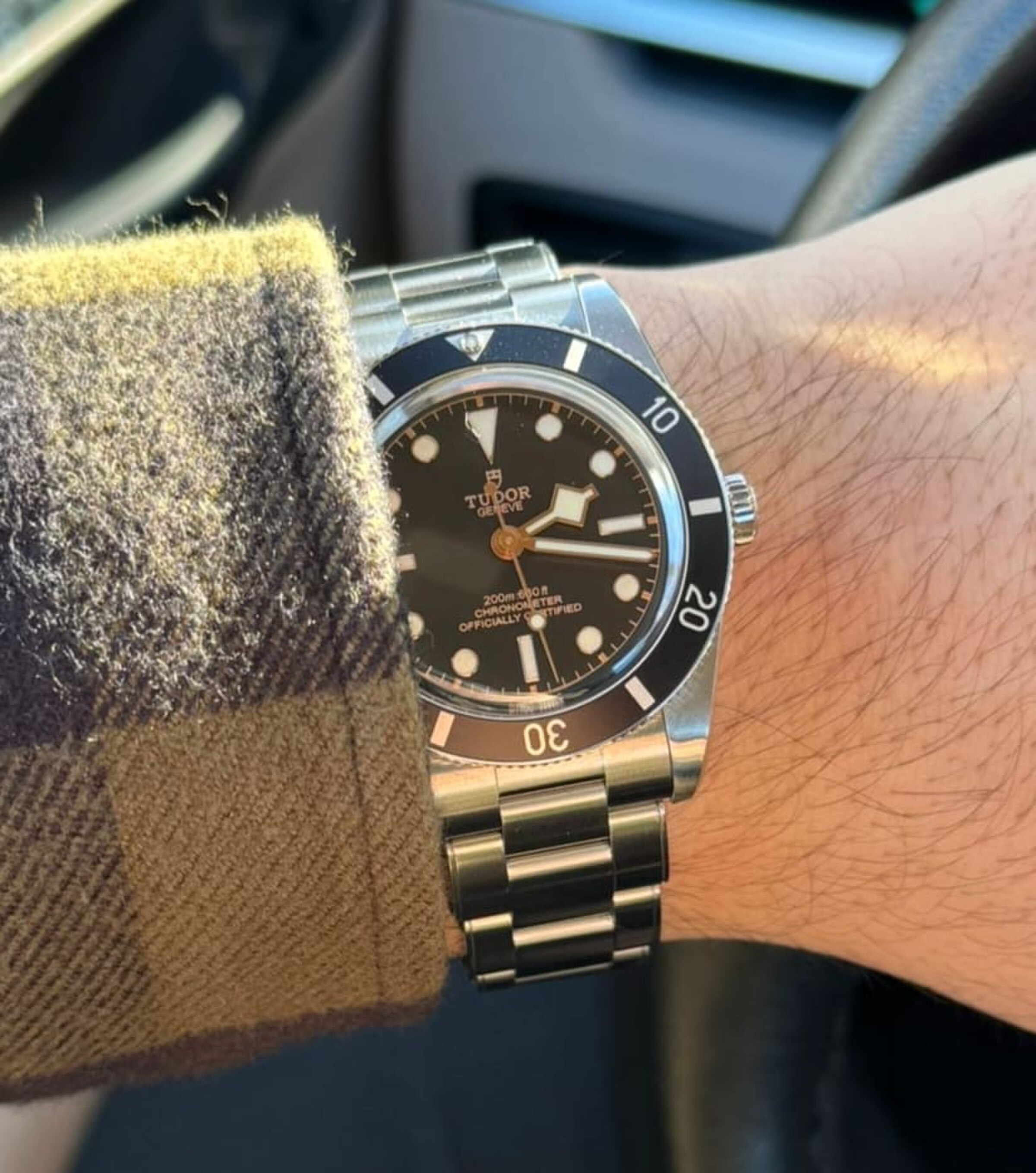
The 37mm Tudor that has quietly redrawn the dive-watch price floor.
Tudor's Black Bay 54 is a 37mm dive watch that, on paper, should have been a minor release and, in practice, has become one of the most-talked-about watches of the last three years. It costs around four thousand dollars on a bracelet, which is to say roughly a quarter of what its nearest Rolex equivalent would run, and about half of what a comparable Omega would. The watch is in the window of every Tudor dealer in every city and is usually not in stock. This is the first thing worth noticing about it.
The watch itself is a carefully considered homage to the Tudor Oyster Prince Submariner reference 7922, the brand's first dive watch, released in 1954. The case is 37mm, the bezel has no minute markings on the first fifteen-minute arc, the crown is small and set close to the case, the second hand is a lollipop. The dial is clean, either black or blue depending on the reference, with applied indices and the familiar snowflake hand that any Tudor diver owner will recognise. The movement is Tudor's in-house MT5400, COSC-certified, seventy hours of power reserve. Water resistance is 200 metres.
None of this is remarkable on its own. What's remarkable is the combination of the specifications, the price, and the sizing choice.
The sizing is the story. For roughly a decade, starting around 2005, the consensus on dive watch case sizes drifted upward. A 40mm diver felt small; 42 or 44mm was standard; several major brands produced 45mm-plus pieces and marketed them as versatile. The market eventually turned — partly because wrists do not get bigger when marketing decides they should, partly because a generation of collectors who had grown up reading about vintage Submariners in the 36mm-to-38mm range started to buy watches and found that the modern versions were not what they remembered. Tudor read this shift correctly. The Black Bay 58 at 39mm was the first significant response. The Black Bay 54 at 37mm is the more confident one.
The 37mm case is, on a wrist between 16 and 18 centimetres around, simply correct. It sits where a dive watch should sit. The bezel does not hang over the edge of the wrist bone. The watch disappears under a cuff, which is useful because a dive watch is not, in practice, mostly worn diving. It is worn under a shirt in a meeting, on a plane, at dinner, occasionally in the water. The Black Bay 54 is the first modern Tudor diver designed as if the brand understood this from the beginning, rather than as a response to market feedback.
The price matters because of what the watch competes with. Tudor's positioning has shifted over the last fifteen years from "cheaper Rolex" to "what Rolex used to be, at a price Rolex used to be," and the Black Bay 54 is the clearest expression of that positioning. A new Rolex Submariner costs around ten thousand dollars and cannot be bought at retail without a multi-year relationship with an authorised dealer. A Black Bay 54 costs four thousand dollars and can be bought, if you are patient, at list price. The specifications are not identical but they are close enough that the gap is hard to justify unless the Rolex crown is specifically what you want.
For a collector looking at a first serious dive watch — or, as many Black Bay 54 buyers turn out to be, a collector looking at the dive watch they will actually wear because the Submariner has become either unavailable or uncomfortable — the Tudor is the sober choice. Not the cheap choice, not the second-best choice, but the one that gets the sizing right and the price right and does not ask the buyer to participate in a retail process that resembles applying for a mortgage.
There are criticisms. The bezel insert is aluminium rather than ceramic, which means it will scratch; some collectors consider this a feature and some consider it a cost-cut. The T-fit clasp's quick-adjustment mechanism is acceptable but not best-in-class. The dial text is slightly busier than the 1954 original, with the Tudor shield logo at twelve o'clock that the 7922 lacked. None of these are deal-breakers. They are the compromises that let the watch cost what it costs.
What the Black Bay 54 establishes — and what makes it genuinely interesting beyond the specific piece — is a reference point for what a dive watch should cost when a serious manufacturer is not trying to extract maximum margin. Four thousand dollars, for a 37mm dive watch with an in-house movement, COSC certification, 200 metres of water resistance, and a design lineage that runs back to a real historical reference. Everything priced meaningfully above that now has to justify the gap.
Most things above that price, on inspection, struggle to.