Why Jil Sander's Quiet Period Ended, and What It Produced
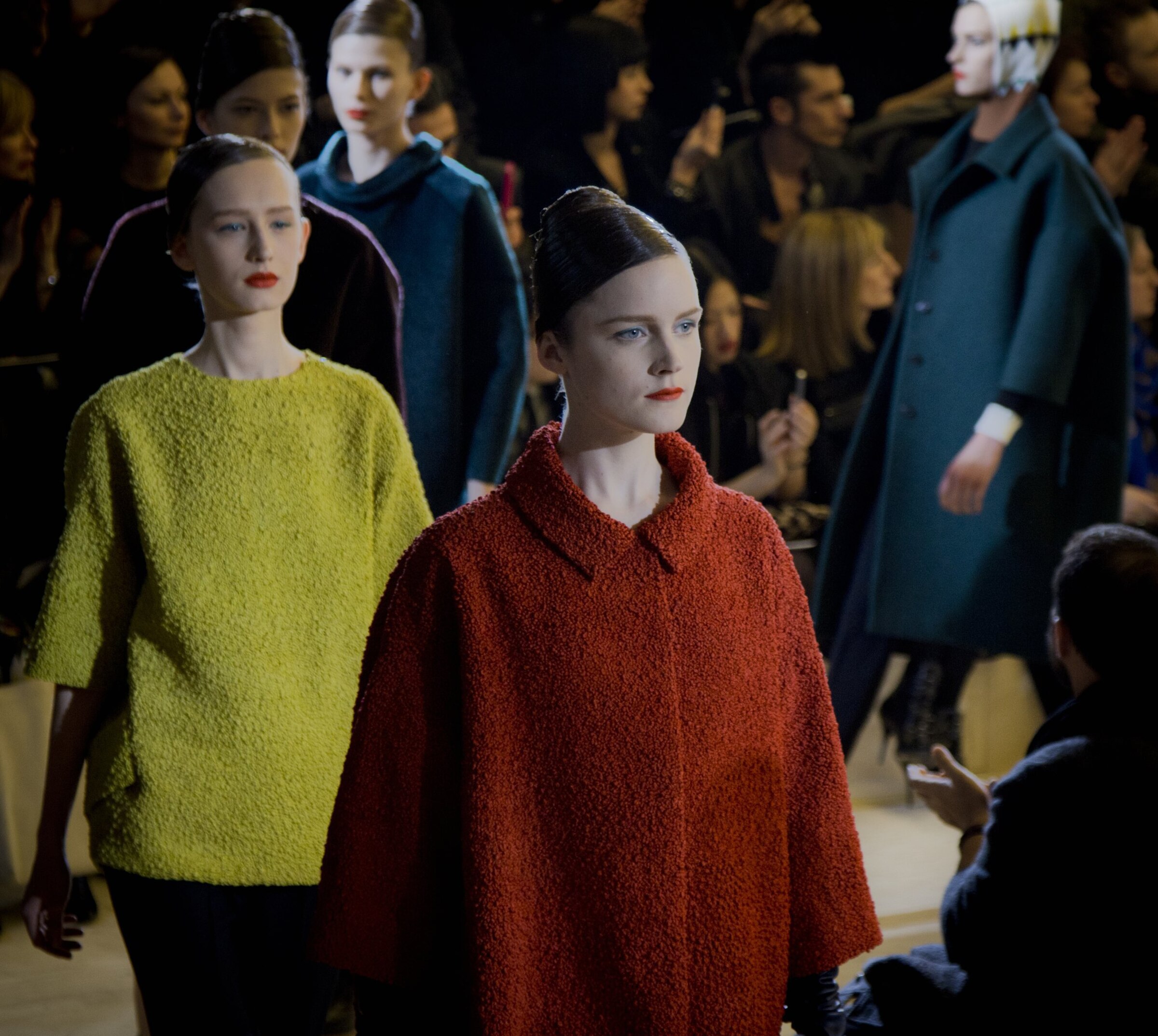
Six years of the Meiers, the arrival of Simone Bellotti, and the specific kind of playfulness the house had been waiting to deploy.
To understand why Jil Sander's recent work matters, you have to understand what the quiet period was. The house founded by Heidemarie Jiline Sander in Hamburg in 1968 has passed through more creative directors than almost any other significant fashion name — Sander herself, twice, with gaps; Raf Simons for seven years; Lucie and Luke Meier for another seven; and now, since 2024, Simone Bellotti, who came from Bally and before that from Gucci — and each succession has produced something different enough that the question of what Jil Sander is supposed to be has been, periodically, genuinely open.
The Meier years, which ran from 2017 to 2023, were the quiet period. The Meiers — he had been at OAMC, she at Armani — produced six years of collections that were, by most measurements, the most restrained work the house has produced in its full history. Beige palettes. Long silhouettes. A specific discipline around tailoring that asked the wearer to be the subject of the garment rather than the other way around. The collections were reviewed respectfully. They did not, most seasons, produce the kind of front-row excitement that fashion houses at this commercial tier are expected to generate. A certain kind of buyer — the kind who actually wears the clothes, as opposed to the kind who photographs them — loved the work and filled wardrobes with it. Everyone else, mostly, did not notice.
The Meiers left Jil Sander at the end of 2023. The house went to Simone Bellotti. The first Bellotti collection — spring 2025, presented in Milan in September 2024 — was the signal that the quiet period was over.
What Bellotti has done, in the two seasons since he started, is not to abandon what the Meiers built but to extend it in a specific direction that has been, until now, underworked in the house's vocabulary: playfulness. Not frivolity, not irony, not the postmodern nudge-and-wink that the mid-2010s house directors sometimes reached for. Playfulness in the Italian sense — a willingness to put a silhouette somewhere the wearer did not expect, to use a colour that the house would not have used five years ago, to trust the wearer to find the work interesting without being walked to the interest.
The spring 2025 collection was the clearest statement of this. Collars that sat higher than the Meier-era collars. Skirts with an unexpected sweep at the hem. A specific red that Jil Sander had not used in about fifteen years, deployed carefully, on three pieces. Tailoring that still carried the house's traditional restraint but that had, in its construction, a degree of wit that the previous directors had not reached for. The critical reception was, after six years of respectful reviews, excited. The front-row photographs circulated.
What the collection did not do — and this is what makes Bellotti's work interesting rather than merely a reaction — is to repudiate the quiet period. Bellotti has been explicit in interviews that the Meier-era discipline is the foundation his work is being built on. The silhouettes are tighter. The fabrications are more adventurous. But the underlying proposition — that a Jil Sander garment is something a grown woman wears rather than an image a young woman posts — is untouched.
The autumn 2025 collection, which followed, confirmed the direction. More confidence in colour. A specific engagement with the house's 1990s vocabulary — the period when Sander herself was running the house and producing the minimalist tailoring that became the template for the whole genre — but updated in a way that felt generational rather than nostalgic. The coats, particularly, were remarkable: long, structured, cut with the kind of precision that the house has always been able to do but has not always chosen to show.
What the Bellotti era has produced, two seasons in, is work that does what the quiet period did not: it commands the attention of the non-customer alongside the customer. The people who would never have bought a Meier-era Jil Sander piece are now looking at the shows. The people who bought Meier-era pieces are still being served — the discipline is intact — but the house is, for the first time in years, a point of conversation in the fashion press rather than a respected presence at the edge of it.
This matters commercially. Jil Sander, under OTB Group's ownership, is not a small operation but has been, for most of the last decade, underperforming relative to the attention its name commands. The Bellotti era appears to be moving that. Stockists have been expanding. The commercial response in Asia has been reportedly strong. The brand has quietly begun to show up in the kind of editorial placements that it had dropped out of during the quiet years.
What Bellotti's work suggests about where Jil Sander goes from here: more. More colour, probably. More adventurous cuts on the tailoring. More willingness to use the house's archives as material to argue with rather than monuments to preserve. The commercial case for this is obvious. The editorial case — that Jil Sander needed to become, again, a house that fashion people talked about, rather than one they respected from a distance — is the more interesting one, and it is the one Bellotti seems to be building around.
For the reader who wears the clothes, the Bellotti era is producing work that is worth paying attention to in a way that the quiet period was not. The Meiers made Jil Sander well. Bellotti is making it interesting. These are different qualities, and the house probably needed both, in sequence, to arrive where it is now.
Buy the coats. Watch the next collection. The house is moving somewhere.